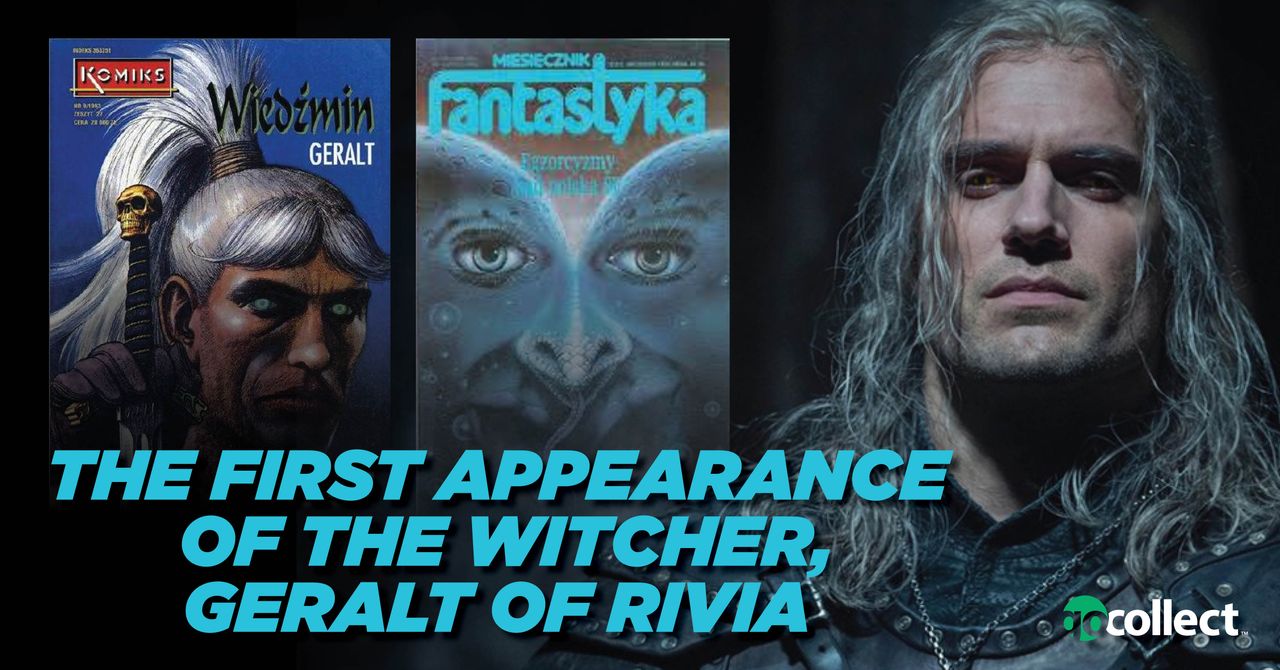
Netflix's The Witcher Season 4 has concluded with the lowest scores ever! Where did The Witcher go wrong? In this article, we'll look at the origins of Geralt of Rivia, aka the Witcher, which may give some insight into why the once highly rated show had such a steep downfall.
Andrzej Sapkowski - First Appearance in Print
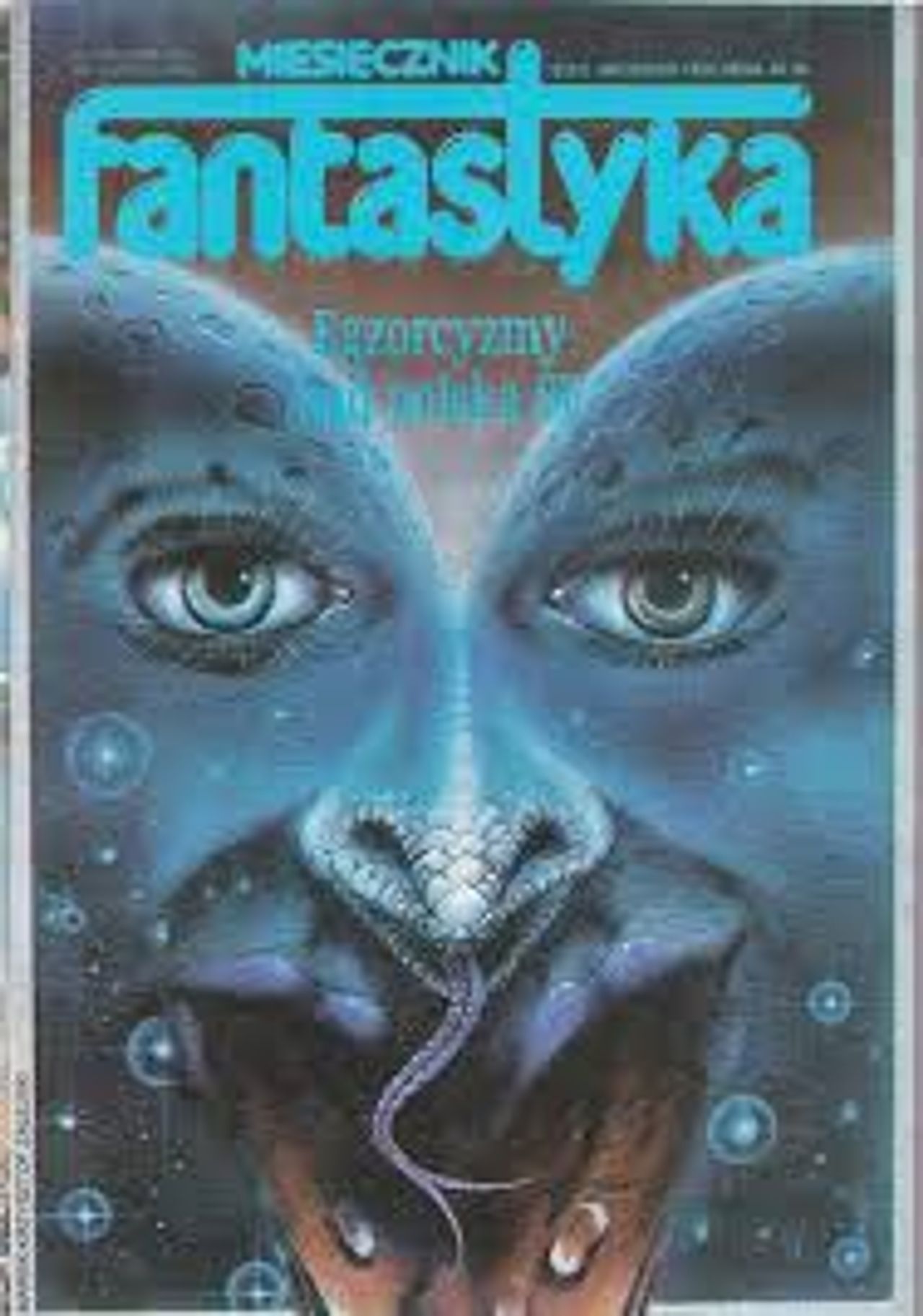
If you are not Polish, then the first time you learned about Witchers and Geralt of Rivia was probably through reading the book series. However, the books are also a variant of the original short stories. In 1985, Andrzej Sapkowski was just a travelling fur salesman with a love of fantasy literature. He decided to enter a short story competition held by the Polish science fiction and fantasy magazine Fantastyka. Sapkowski's short story, Wiedźmin (or The Witcher in English), would appear in Fantastyka's December 1986 issue and win third place. Though good, this placement was likely due to the fantasy genre being considered a genre for children in Poland and the mature themes of the Witcher being inappropriate for readers. Overwhelming positive fan reaction spurred Sapkowski to write more stories, and in response to their demand, Fantastyka would continue to publish Witcher short stories in later editions.
First Appearance in Comics
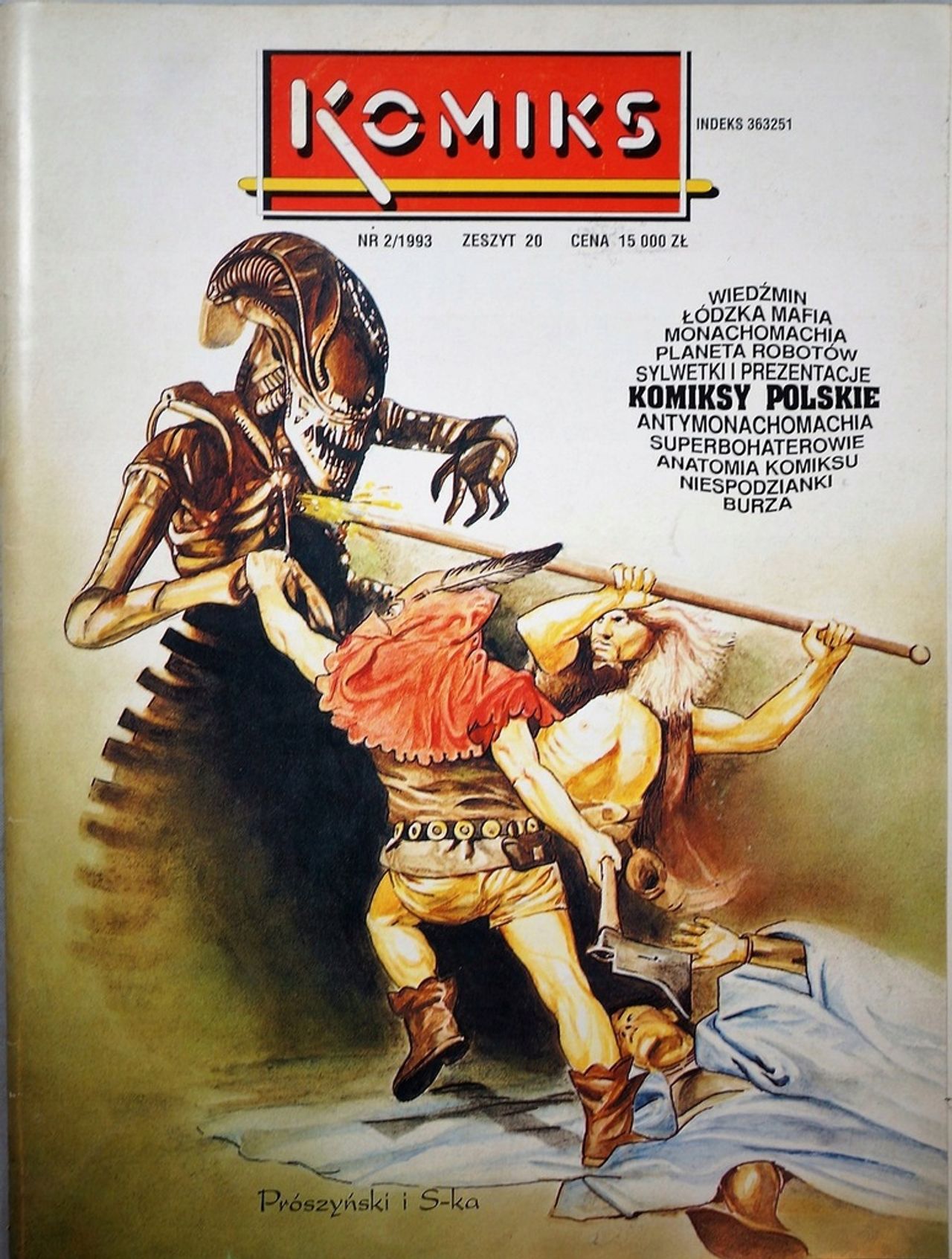
Fast forward to the early 90s and the comic boom, and Fantasyka wanted in on the comic industry, changing their names to Komiks. They reached out to Andrzej Sapkowski to ask if they could adapt his stories into a comic series. In issue #20 a 6-page preview of The Witcher, along with an interview with Sapkowski, proved to be a hit, and they decided to publish all the Witcher stories through the next few years.
Komiks #20 (February 1993)
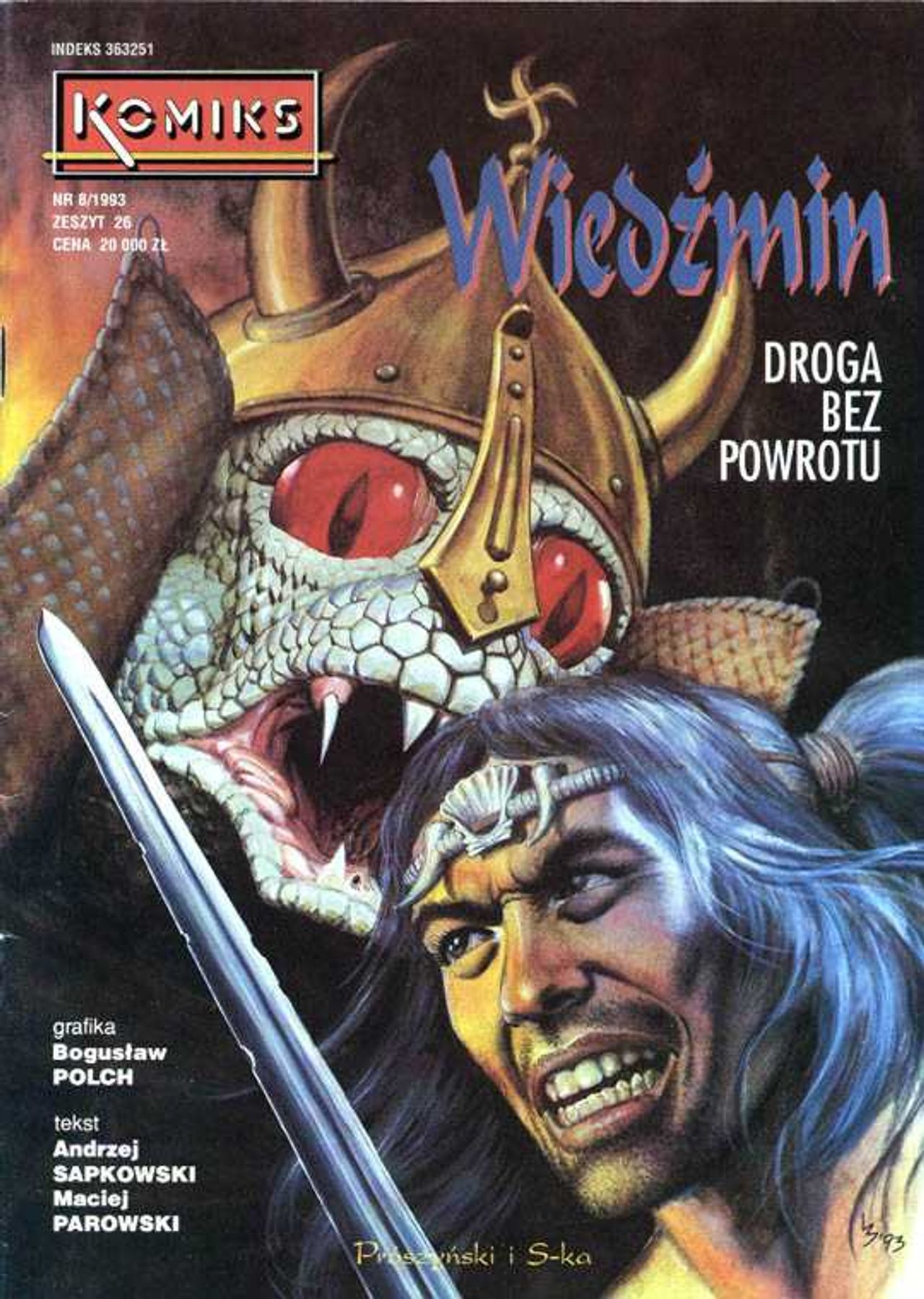
Komiks #26 (August 1993) - First mention of Geralt of Rivia and the back cover featuring the next issue (first cover appearance).
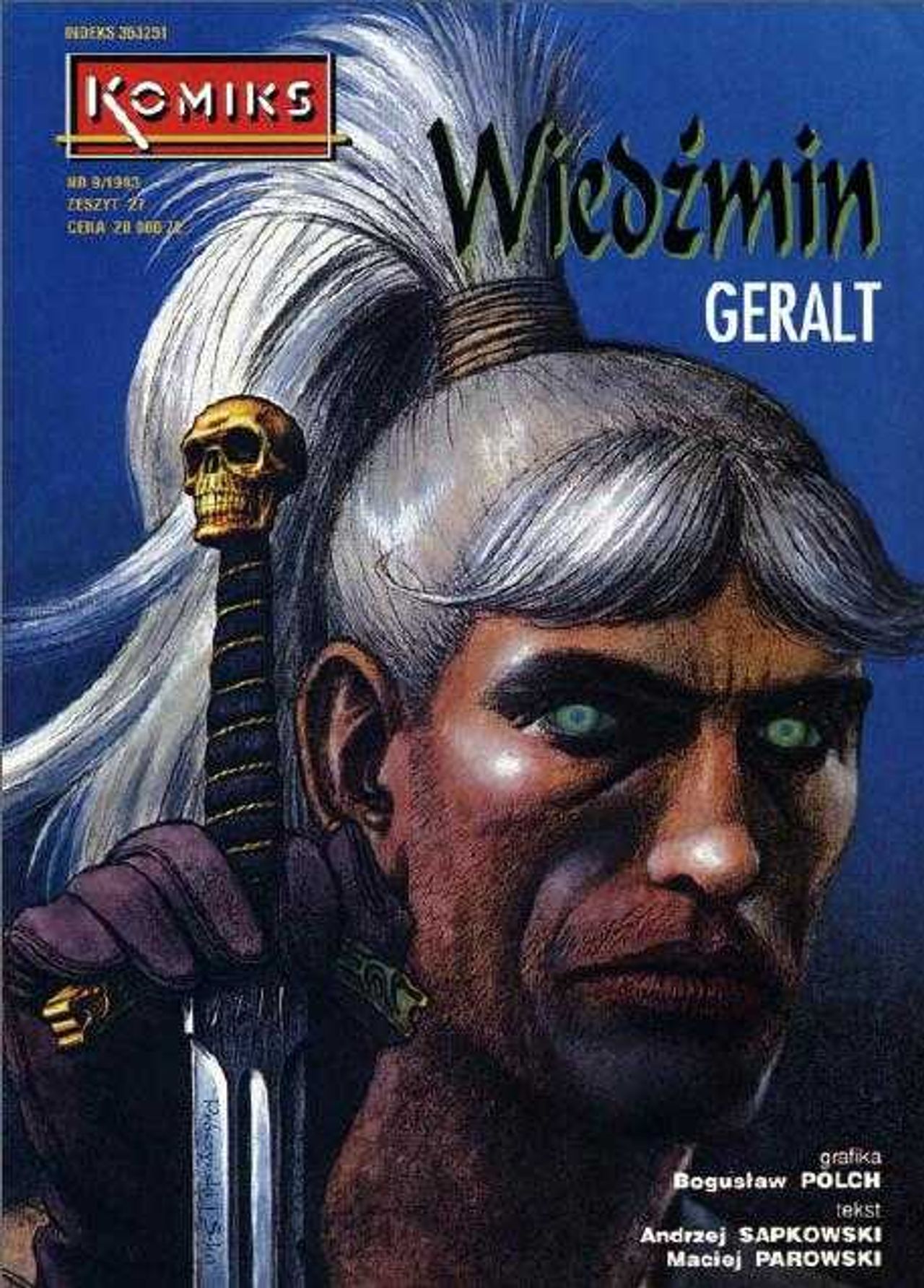
Komiks #27 (September 1993) - First full appearance
First Appearance in Books
Sapkowski claims that at the time, Polish publishers only believed that Anglo-Saxon-based fantasy authors would be popular and that native Polish writers would be too risky. In 1990, SuperNowa took the risk to publish The Witcher as a book series. In Sapkowski's words, "now everybody envies them."
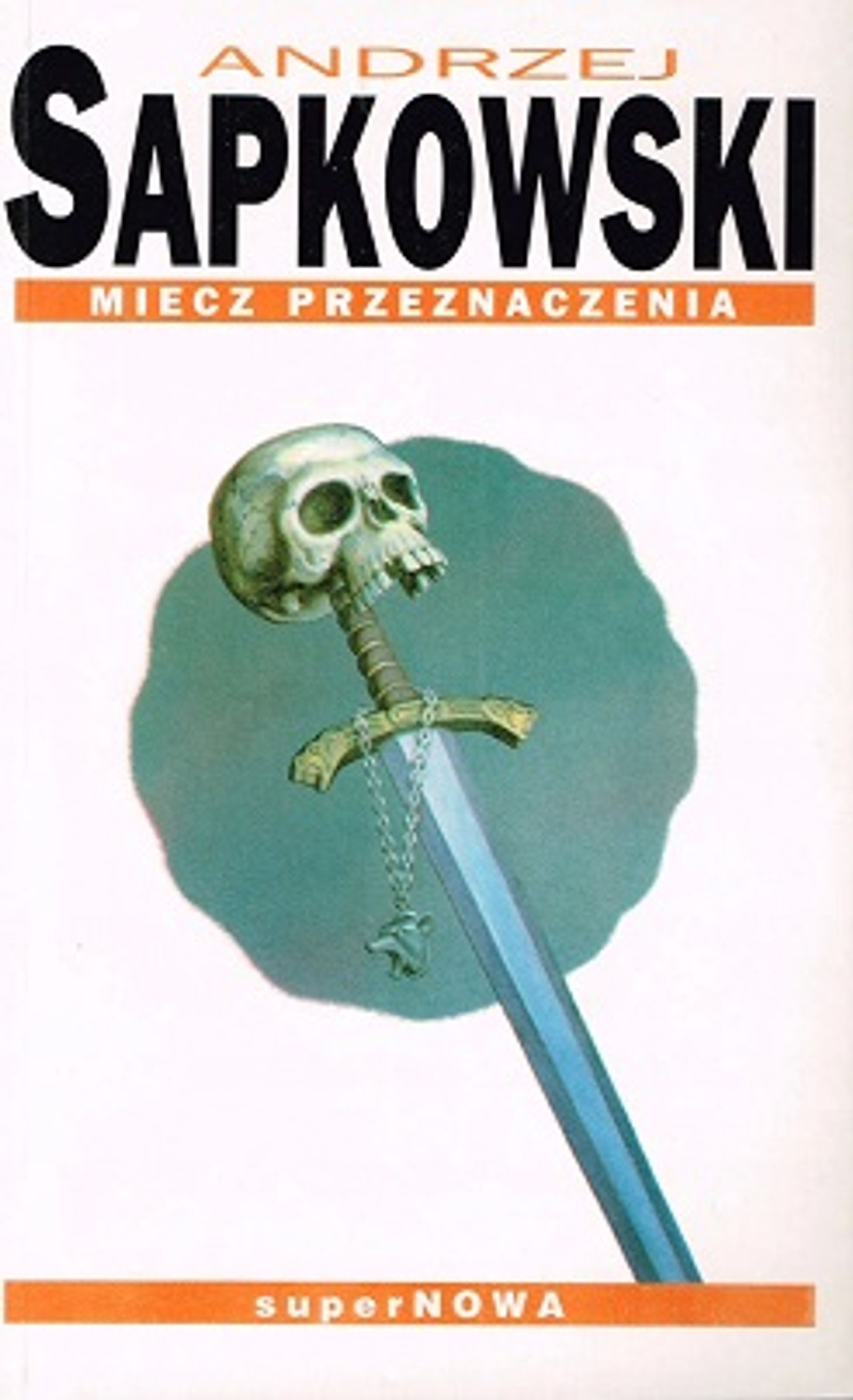
In 1992 and 1993, the books Sword of Destiny and The Last Wish were published. They contained the original short stories and included new ones. In 1994, 1995, 1996, and 1997, respectively, the following books were added: Blood of Elves, Time of Contempt, Baptism of Fire, and The Tower of the Swallow. In 2013, a new book, Season of Storms, was added as a standalone prequel to the Witcher series. With Sapkowski's permission, the Polish publisher Solaris released a collection of eight spin-off short stories set in the Witcher universe written by Russian and Ukrainian fantasy writers.
Later in 2020, Sapkowski stated that he had "some plans" for a new entry in The Witcher, but had no fixed plans. In August 2023, he confirmed that he was penning a new instalment to the series. However, Sapkowski declined to supply further details regarding the as-yet-untitled new Witcher novel, leaving fans to speculate whether protagonist Geralt of Rivia's next adventure will be a prequel or sequel, or even focus on a new Witcher.
The Games
Like many, my first introduction to The Witcher world came from the RPG game series. Published by Atari, the PC game The Witcher (2007) would spark the series' popularity. The first instalment of Witcher games led to The Witcher 2: Assassins of Kings (2011), The Witcher 3: Wild Hunt (2015), plus two expansions, Hearts of Stone and Blood and Wine, plenty of spinoffs, including the upcoming Project Sirius, and the remake of the progenitor, The Witcher Remake.
The main games were critically acclaimed, with the lowest Metacritic score being 81! The games were so popular that in 2018, the creator of the series, Andrzej Sapkowski, sent a notice demanding he be remunerated for sales of The Witcher video games. Orginally Sapkowski provided the license to CD Projekt based on a lump sum payment. By February 2019, CD Projekt and Sapkowski worked out a settlement agreement that would provide Sapkowski with additional royalties for their video game series and maintain an amicable working relationship.
The Show and Henry Cavill
The popularity of the games led to a Netflix show by Lauren Hissrich with protagonist Geralt of Rivia, played by Henry Cavill. Cavill, a self-described nerd and character enthusiast, helped lead the show to a successful season 1 and 2. However, its third season and spin-offs would see a dramatic drop in ratings that would only worsen by the latest season 4.
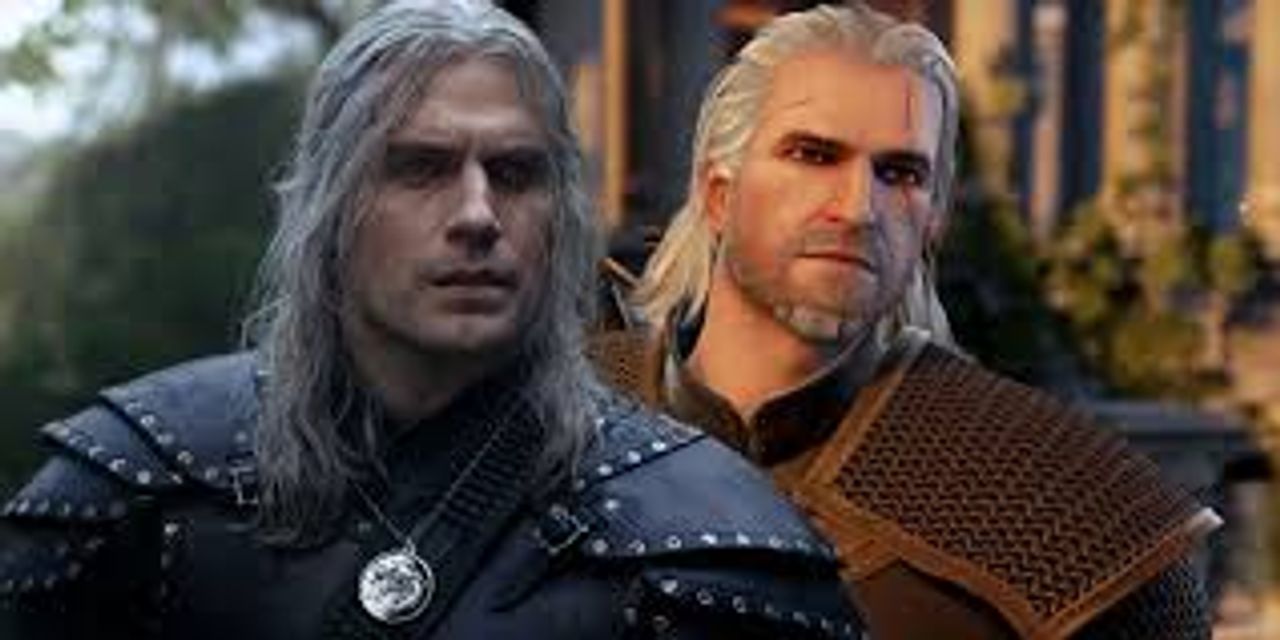
On October 29, 2022, before season 3 aired, Netflix surprised fans by revealing that lead actor Henry Cavill would be replaced by Liam Hemsworth for season 4. As Hemsworth and show runner Lauren Hissrich have said themselves, these were "some big boots to fill", and for most viewers, their skepticism seems to have proved right.
There were various theories for why Cavill was departing this successful series, such as conflicting interests with Cavill's aspirations to continue to play Superman on the big screen (we now know that didn't work out). However, the most compelling theory was that there was a difference in opinion between Cavill and Hissrich on the show's direction and its faithfulness to the source material. Early on, Cavill stated that he was happy to continue playing Geralt "as long as we can keep telling great stories which honour Sapkowski's work."
While promoting season 2, Cavill told Total Film: "This season, I really wanted to make sure that we represented the book's Geralt more accurately, and that we saw him speak more. I pushed really, really hard for that." On Netflix's YouTube Channel, Cavill also stated: "I'm a huge fan of the books and staying loyal to them. It's about making sure that story happens without too much in the way of diversions or side things going on to muddy the waters." Despite the push for continuity, amongst other changes - prominently season 2's ending - it's likely that Cavill wasn't happy with the show's direction. Executive producer Tomek Baginski had also revealed the show's creative team had agonized over making changes to the books but felt it was necessary.
"When a series is made for a huge mass of viewers, with different experiences, from different parts of the world, and a large part of them are Americans, these simplifications not only make sense, they are necessary... It's painful for us, and for me too, but the higher level of nuance and complexity will have a smaller range, it won't reach people." - Tomek Baginski
In response to the critiques of diverging from the source material, Hissrich has said, "No one's taking the books away. No one's taking the video games away... everyone can have their version of the Witcher." At the same time, Hissrich has said that she and the team are ready to take a step back after season 5.