WHAT'S INSIDE:
-Dolly Parton rebrands Playboy collecting
-An early oddity is listed at Heritage Auctions
-Newstand vs. Direct is not just for comics
-Sifting for golden games at Goldin Auctions
-It's open season for Duck Hunters
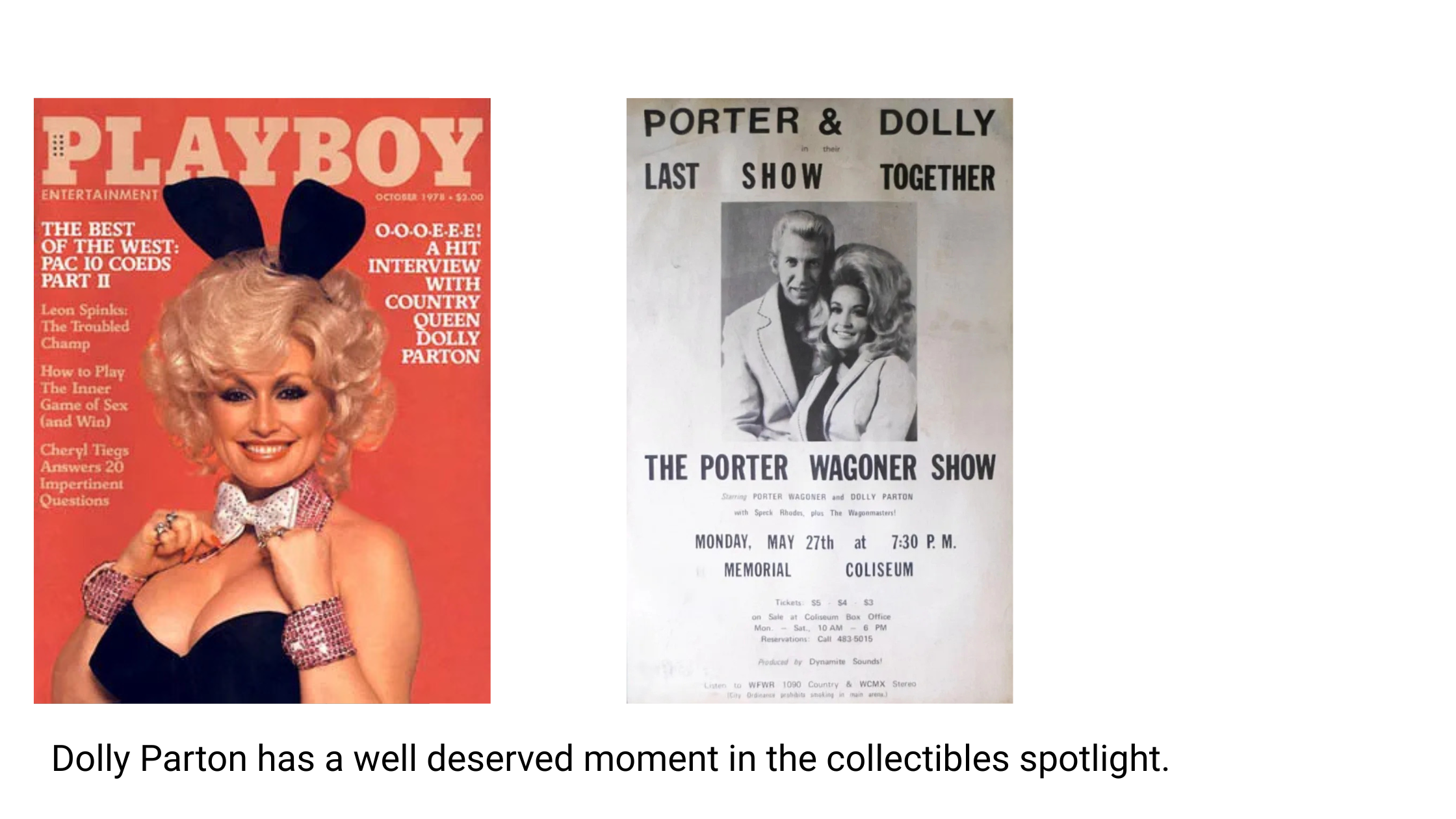
The passing of Dolly Parton has rocketed her up the Hottest Magazines list all the way to #2, interrupting the sports dominated top of the magazine marketplace. Her appearance in Playboy volume #25 issue #10 from 1978 has recorded nearly two dozen CGC graded sales over the past month, with every grade feeling an uptick in value.
We also recorded a very rare concert poster sale from the final show Dolly Parton and Porter Wagoner performed together before she began her solo career and ultimately skyrocketed to stardom. Our concert poster specialist has never seen another example before this one. What makes it even more interesting is that the sale took place through an eBay auction, where it finished at $456 after 44 bids.
That is some decent traction for an obscure, yet highly important, piece of music history.
Unfolding alongside this surge in Parton memorabilia, we are also seeing a minor increase in Playboy sales overall. Is it possible that the loss of an influential icon like Dolly could spark a broader hunt for overlooked female focused collectibles?
Dolly Parton changes the game when it comes to straight-up Playboy collecting. She agreed to the cover on her own terms, with no nudity, wearing a modified bunny suit designed to cover more skin out of respect for her religious country music fans. The issue then devoted 30 pages to Parton’s life and career. No one is collecting a sex symbol when they pick up this magazine. They are celebrating and collecting her as an icon.
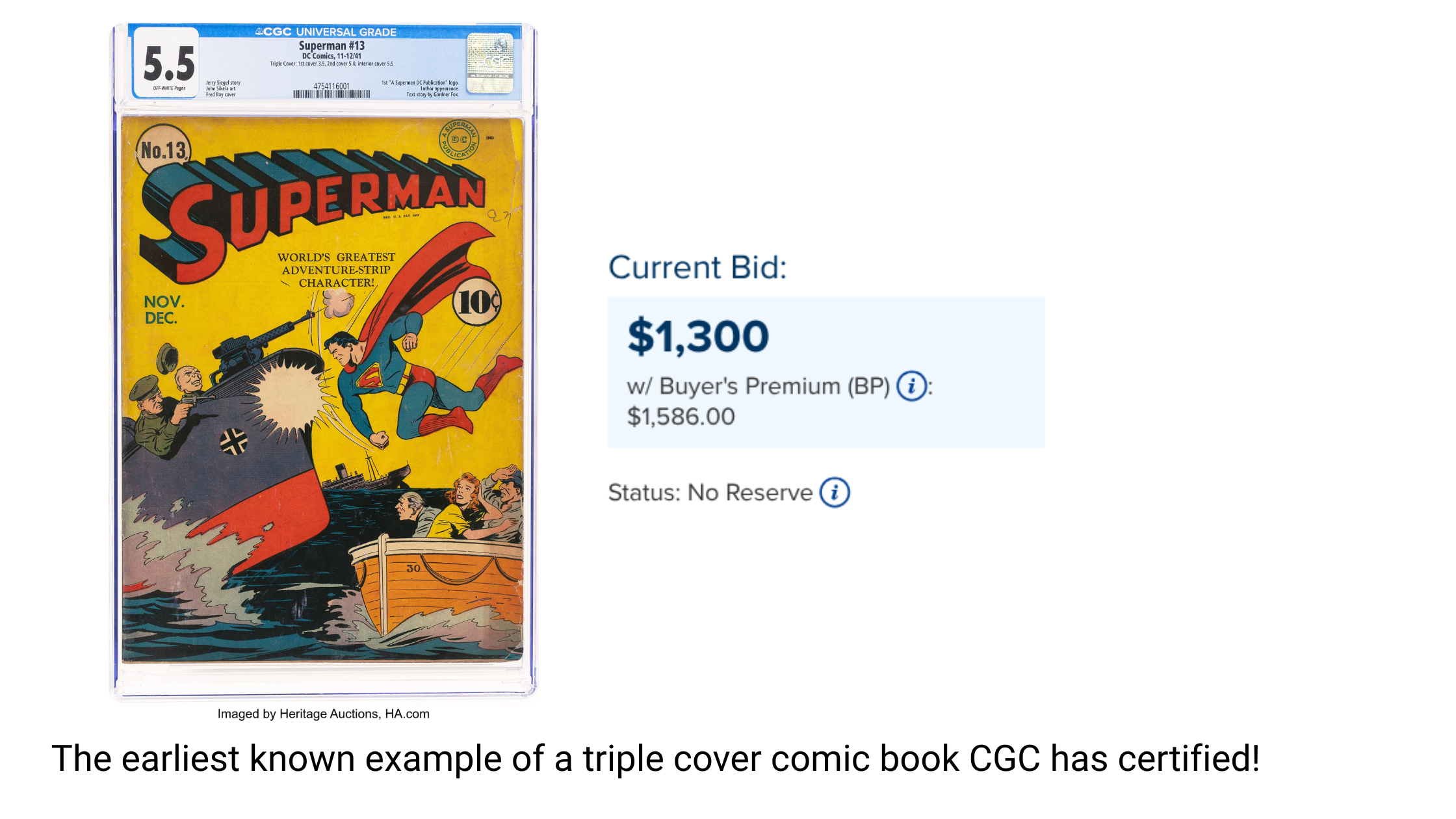
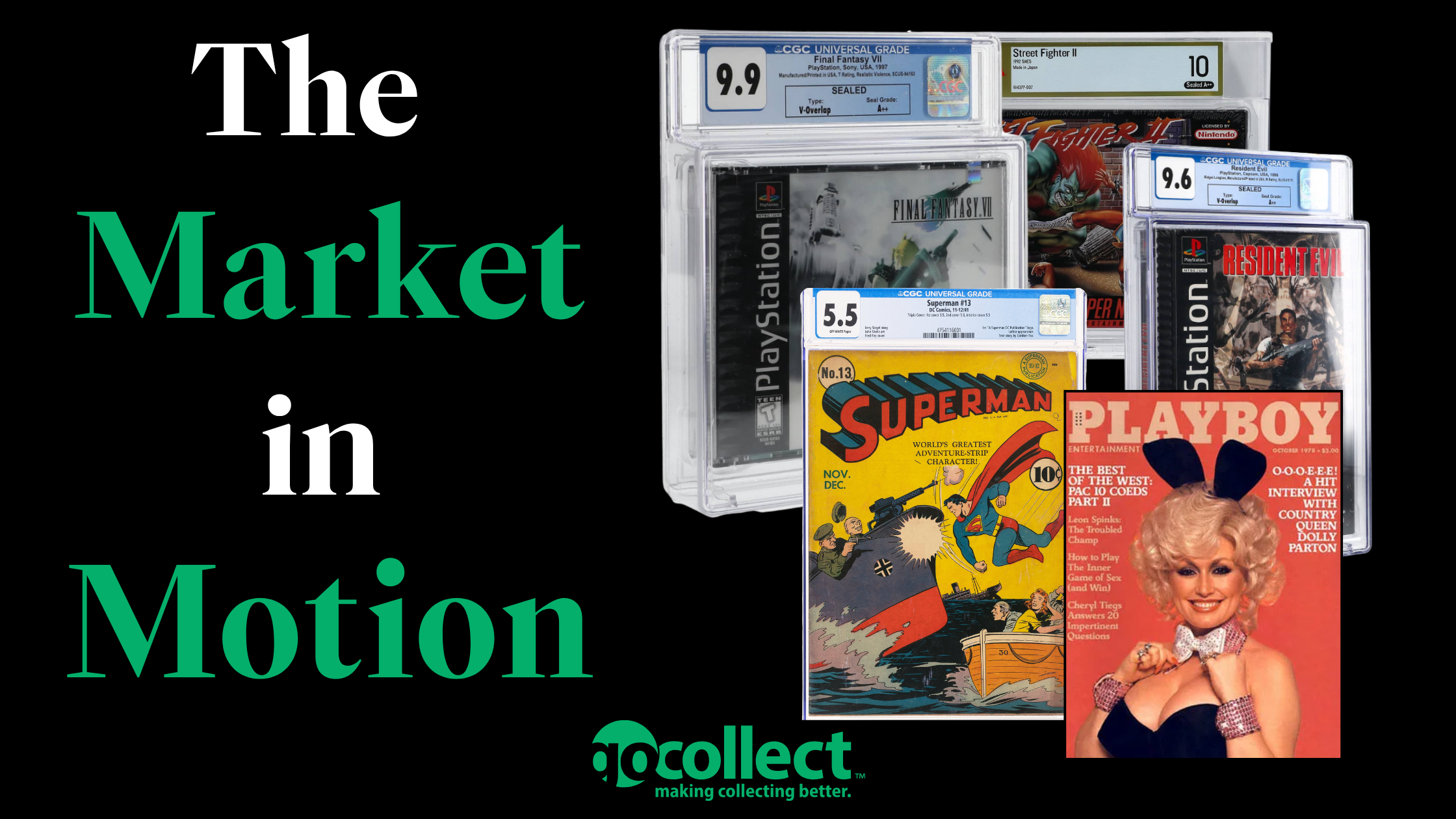
An interesting comic book story slid into our inbox this week. Heritage Auctions is currently hosting the earliest known example of a triple cover comic book that CGC has certified to date. And it just happens to be a comic that introduces a pretty cool character who has their own television series in development.
The book is Superman #13, the first full appearance of Jimmy Olsen. The current bid is $1,300 with six days to go. Not everyone in the hobby feels the same way about multiple covers, but you have to admit that knowing this is the earliest published example ever found adds some extra flair to a mid grade Golden Age listing.
These types of oddities can be difficult to track and even harder to predict. The intrinsic value of the comic is still there, but the final bidders are buying something else too. They understand the niche quality of the copy, and they are willing to pay for the fact that there is not another one waiting around the corner.
Nearly every collecting hobby has this type of novelty premium somewhere along the way.
Another, much larger and understood version of this niche premium has been developing in comic books for years through the Newsstand to Direct Edition equation. Anyone who collects along this path knows that the value ratio between Newsstand and Direct Edition copies can range anywhere from 1:1 to more than 20:1, depending entirely on the year of publication and the certified grade.
Well, there is a similar trend worth investigating in the vintage magazine hobby.
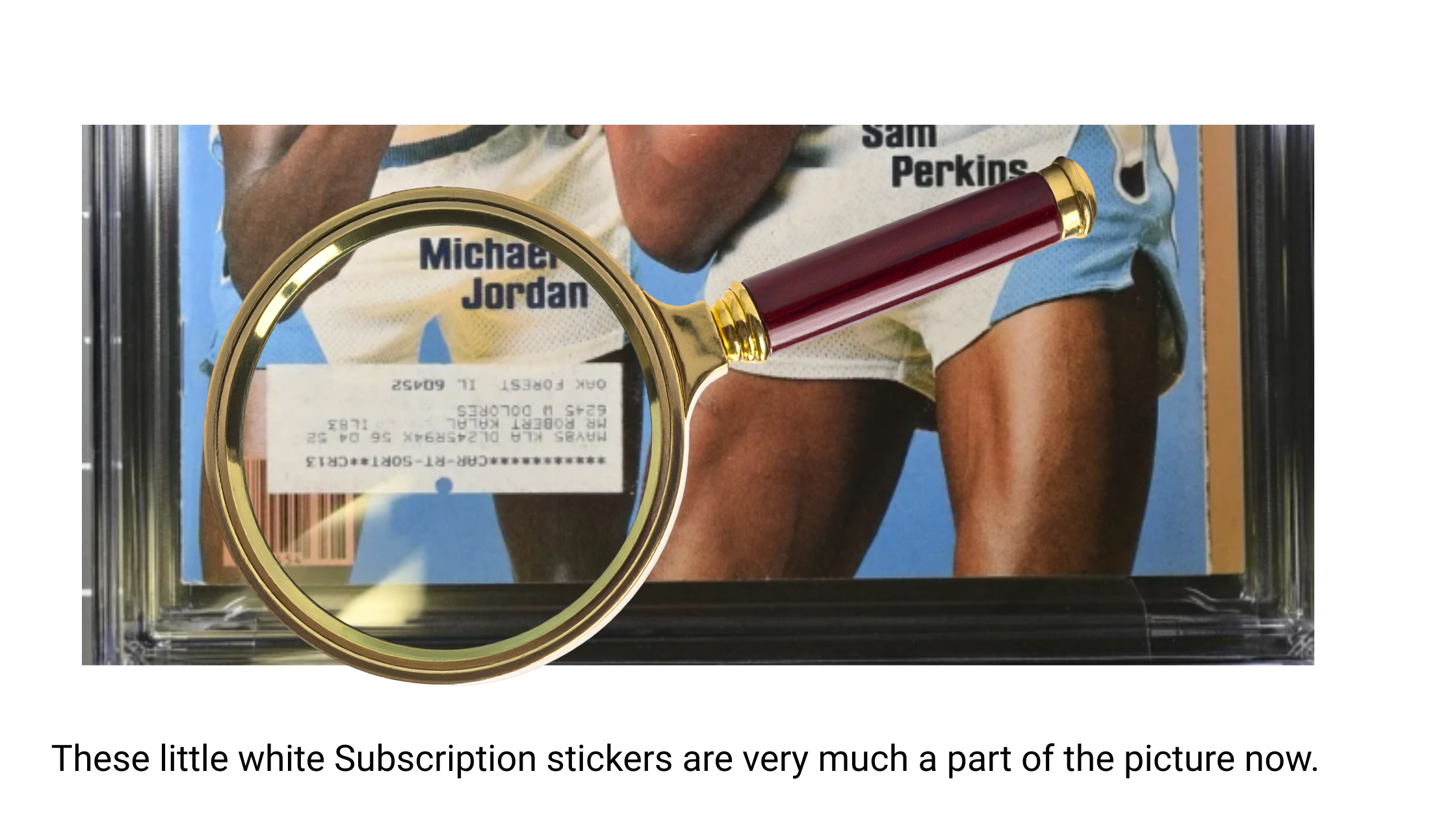
We have now ingested enough sales data to get an early read on the value relationship between Subscription Editions and Newsstand Editions in collectible magazines.
If you are just joining the conversation, here is the important distinction:
A magazine purchased directly from a newsstand never had a subscriber’s address attached to the front cover. A subscription copy was delivered to someone’s front door, often with a small white rectangular mailing label showing the subscriber’s personal address.
Think Direct Edition comic versus Newsstand Edition comic. One copy was handled very differently on its way to the consumer, and each version developed characteristics that collectors now recognize as part of the item's journey itself.
What we are learning is that the magazine market is behaving in a very similar way.
Depending on how you collect, there is money to be saved or potentially made by understanding the difference between these two editions. But the rule of average does not appear to be universal. The ratio changes with the person on the cover, the year of publication, the grade, and perhaps most importantly, the importance of the cover itself.
Historical estimates of Sports Illustrated have placed Newsstand production at only a small percentage of the total print run, meaning that the enormous number of subscription copies can create the illusion of abundance while the collectible Newsstand population remains comparatively thin.
This is where Michael Jordan becomes particularly interesting. As we discussed last week, Jordan has a collector accepted trifecta of first Sports Illustrated covers. And those 3 covers have a large amount of sales accumulating. His first two appearances predate his earliest known rookie trading cards, while his third appearance becomes his first Chicago Bulls cover and effectively acts as his magazine rookie.
If we take the average Newsstand sale across Jordan’s first three covers and compare it against the average Subscription Edition sale at the same grade, the difference gives us a much cleaner measurement of the premium collectors are actually assigning to the edition itself.
Our early data gives us an interesting starting point. Looking at the same grades across the Newsstand and Subscription Editions of Jordan's first cover, the Newsstand copies are currently averaging roughly a 2.5:1 ratio, or about 150% more than their Subscription counterparts. But that average hides something more interesting. At an 8.5, the Newsstand is currently bringing 4.6x the Subscription Edition. At 7.5, that gap falls to 1.78x.
For Jordan’s 2nd cover appearance, the gap widens significantly from 6x to 8x depending on the grade and the timing of the sale.
And for his rookie cover as a Chicago Bull, the gap tightens up again and finds a bit more stability across the grades, averaging around 5x. Being that this issue of Sports Illustrated is arguably the most important magazine in the collectibles market, that 5x multiplier is proving to be a standard ratio being assigned to high grade, very significant magazine issues across the board that have both a Newsstand and a Subscription Edition. When it comes to less significant magazines, the multiplier appears to jump up higher, closer to 8x. The premium is moving with the collectible.
And that brings us back to the little white rectangle. For years, it was simply something that covered up part of the picture. Now it is a part of the picture.
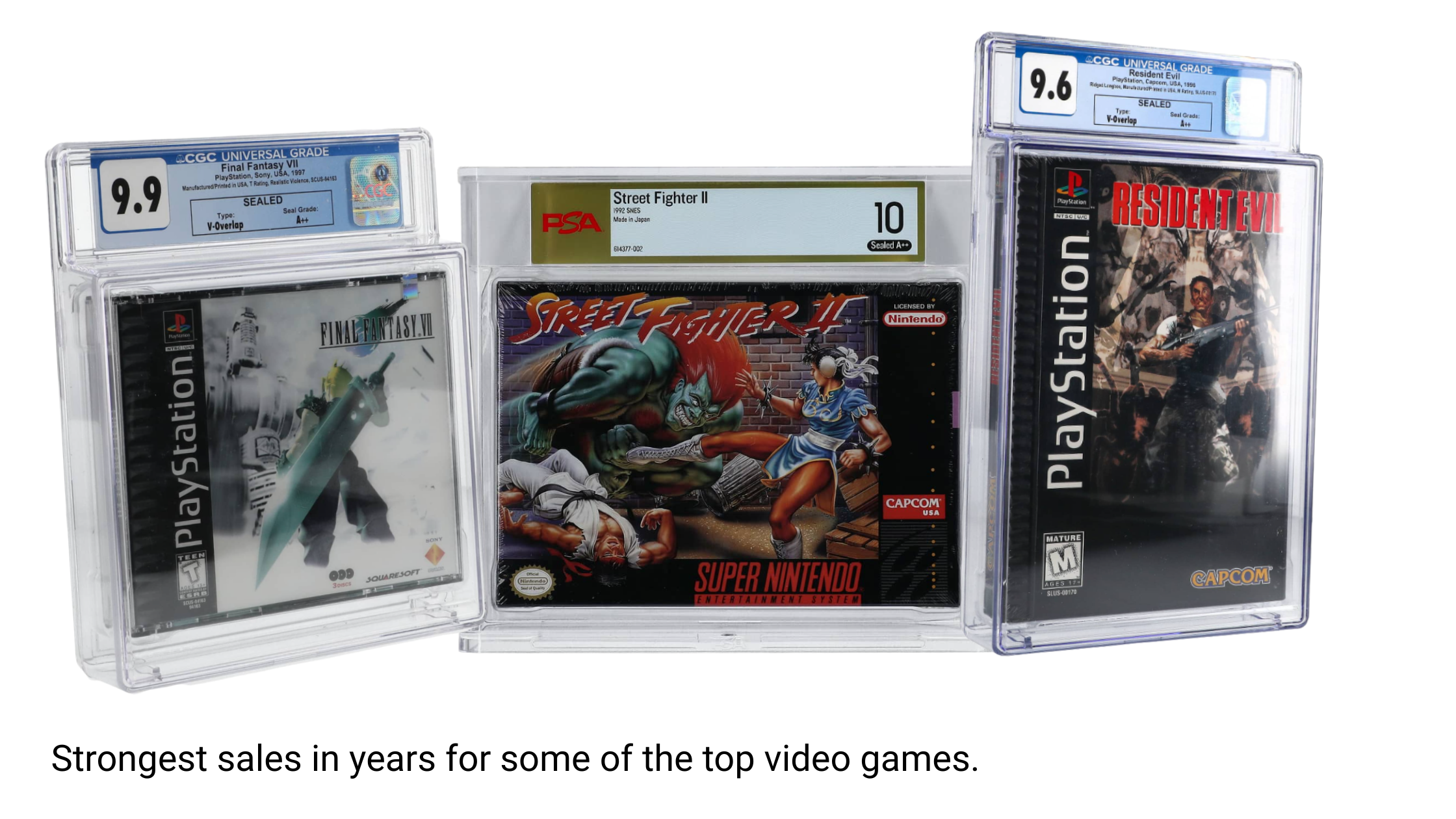
Video games had another extremely good showing last week, this time at the 2026 Summer Pop Culture Elite Auction at Goldin. We saw some holy grails of the hobby finally move past their 2021 record values achieved during the initial video game boom.
The star of the show was a CGC 9.9 copy of Final Fantasy VII for the PlayStation. That game finished for $185,303, beating the $144,000 record set five years ago for a CGC 9.8.
A PSA 10 copy of Street Fighter II finished at $103,700 which absolutely obliterates the 2022 record of $25,200 that a WATA 9.8 A++ received.
Halo: Combat Evolved set a record in the 9.8 A++ with a final bid of $45,750, beating the $33,600 finish achieved back in 2022. That is a 36% increase.
A CGC 9.6 A++ of Resident Evil (First Production Longbox) sold for a whopping $93,940, which is the strongest sale for that game since the 2022 finish of $192,000. Still a long way off that initial value set, but since the last two sales skirted around the $40,000 mark, this remains a very strong showing.
A mid-production copy of The Legend of Zelda had a strong finish as well. The sale jumped 55.6% from its last $40,000 sale, finishing at $62,220.
And finally, the curious case of a final production cartridge has caught the attention of a few hobbyists, and sparked a lot of conversation. A new variation of the split-image masterpiece from our NES childhoods - Super Mario / Duck Hunt - has captured the spotlight in this auction as well. The cartridge in question comes with its own juicy backstory, and you can find that here.
That story was published a couple of months ago. A PSA 10 example sold in this auction for $12,200.
We are beginning to see some of the strongest objects in these hobbies establish fresh ceilings after spending years below their previous peaks. The question is whether this is the beginning of another broad expansion or simply a concentration of attention around the very best examples.
Whether it's a Newsstand collectible, a triple cover, a first appearance, a first production, or an obscure variation of a cartridge, collectors keep finding ways to separate one object from the millions of others that look almost exactly like it.
The market is very proficient at identifying the difference.