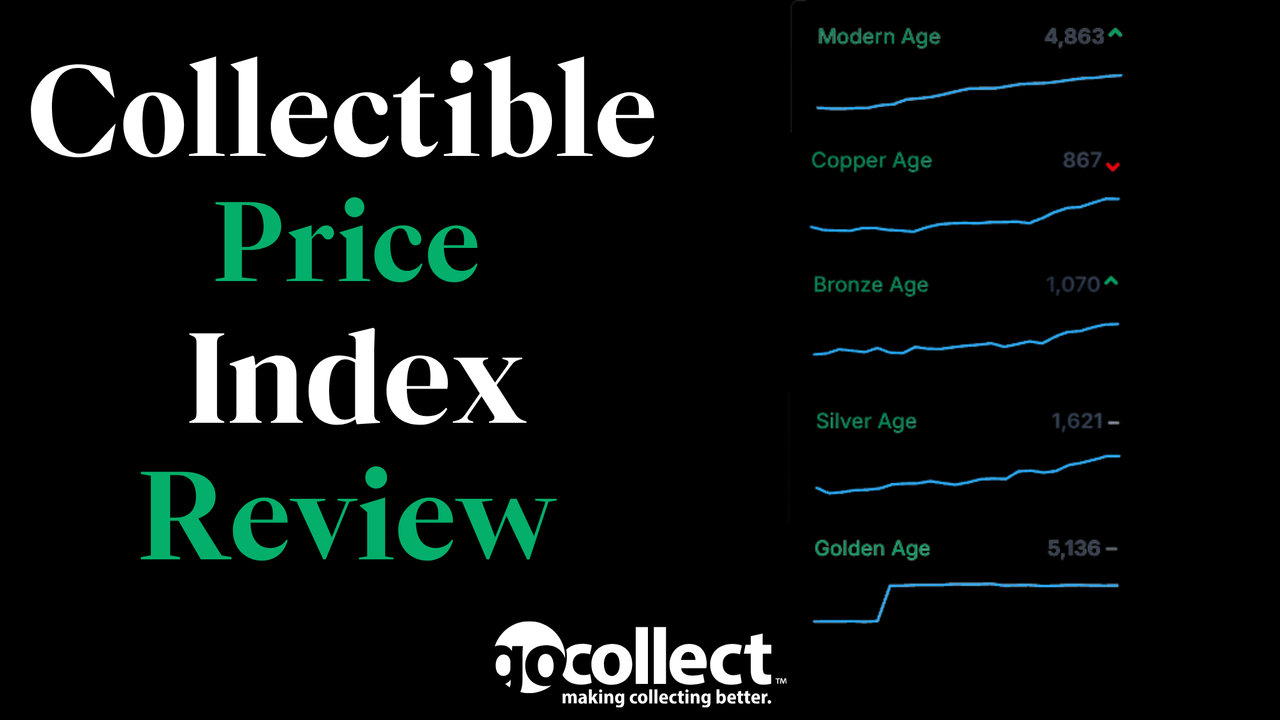
While the broader comic market has spent the past year sorting itself into distinct personalities - Modern Age racing ahead in bounds, Golden Age stepping up in discrete jumps, Silver and Bronze grinding through measured recoveries - the segment of the market known as Pre-Code Horror has been doing its own thing in the shadows.
These are the books that changed everything. In 1954, many were held up in front of the U.S. Senate Subcommittee on Juvenile Delinquency as proof that comics were corrupting America's youth. The hearings triggered the Comics Code Authority, gutted the horror and crime genres overnight, and forced the entire industry to either clean up or shut down.
Yet today we celebrate them. Collectors chase them, pay record prices, and treat the very images that once sparked national outrage as cultural treasures.
As of the latest update (around September 27, 2026), the Pre-Code Horror CPI sits at 1,044. That is the high-water mark for the period we are examining. The index is built from CGC Universal label sales in grades 0.5-8.5, using the three most recent sales for each of the 59 titles in the basket. The core methodology stays very consistent: it captures real mid-to-lower grade activity in a segment where high-grade copies are scarce and single sales can move the needle.
The Past Year: Steady Clawing from the Low 980s
Looking at the full twelve-month window from early October 2025 through late September 2026, the index opened in the mid-to-high 970s and finished at 1,044. That is a gain in the neighborhood of 6-7 percent, depending on the exact starting point you choose on the chart. The path was not a straight line. Early in the period the index spent time consolidating near 980-990. It held a relatively tight range through the winter months of late 2025 into early 2026, with only minor weekly fluctuations.
The real movement began to show in the spring. By March and into April 2026 the index had pushed through 1,000 and was sitting around 1,004 by early April. From there the climb became more consistent. A noticeable step higher appeared in the June window, followed by further firming through the summer. By late September the index had reached its current 1,044 reading, with the most recent weekly move showing a 0.7 percent lift from 1,037.
This is classic Pre-Code behavior. Liquidity is much thinner than in Silver or Bronze Age keys. Many of these titles have small census counts in the grades that matter for the index, coupled with enormous expected values. When material is quiet, the index drifts sideways. The past year delivered more of the former than the latter.
Compare that trajectory to the broader era indexes and the personality difference is obvious. Modern Age has been on a near-uninterrupted climb. Golden Age delivered its gains in two clear step-ups. Silver and Bronze found floors and recovered more gradually. Pre-Code Horror sits closer to the Golden Age pattern in its reliance on discrete sales events, but the overall percentage move has been steadier and less dramatic than the absolute jumps we saw at the top of the Golden Age basket.
SIx-Month Window: April to September
Zoom in to the six-month period that begins around April 5, 2026, and the picture sharpens. The index stood at 1,004 at that point. By September 27 it had reached 1,044. A clean 40-point, 3.98 percent gain. The average over that window sat around 1,029, with the high and low bookending the period exactly as you would expect from a market that found its footing and then pushed higher.
This six-month stretch captured the bulk of the year’s meaningful appreciation. The spring gave way to consistent weekly advances. The divisor itself expanded during this window (from the high 3,600s into the 3,900s), reflecting adjustments in the underlying population of tracked books, yet the index still posted solid gains. That is a healthy sign: the index climbed even as more books were added to the calculation, which means the gains came from real price strength rather than just fewer titles being tracked.
Collectors who have been watching this segment for years will recognize the pattern. Pre-Code horror does not need a media event or a Hollywood announcement to move. It responds to the simple presence of fresh material in the grades that the index actually uses. When those copies appear and find willing buyers at higher levels, the CPI follows.
One-Month Window: Late-Summer Momentum
The most recent month has been constructive. The index moved from the mid-1,030s into the current 1,044 reading, including a solid weekly gain of roughly 0.7 percent in the final update. In a segment this thin, a 0.7 percent weekly move is more meaningful. Short-term noise is always present in any CPI, especially one with a three-sale lookback. A single strong (or weak) result can temporarily influence the reading. But the fact that the one-month, six-month, and twelve-month windows all point in the same direction is the more important takeaway. This is not a market fighting itself. It is a market that has been accumulating strength.
What the Numbers Are Really Saying
The past year of Pre-Code Horror data shows a market that still flies under the radar compared to the flashier first appearances and high-grade modern keys. Gains have been steady. Fresh copies have been absorbed without big pullbacks. And the index has made new highs without needing a movie announcement or media push.
Collectors who stick with these books have been rewarded for their patience. Every major time frame: one year, six months, and one month - points higher. The climb has been more of a grind than a rocket ship. And the sales feeding the index keep supporting the move. Quiet strength like this tends to last.
Twelve Books with Real Action: Past Sales and Outlook
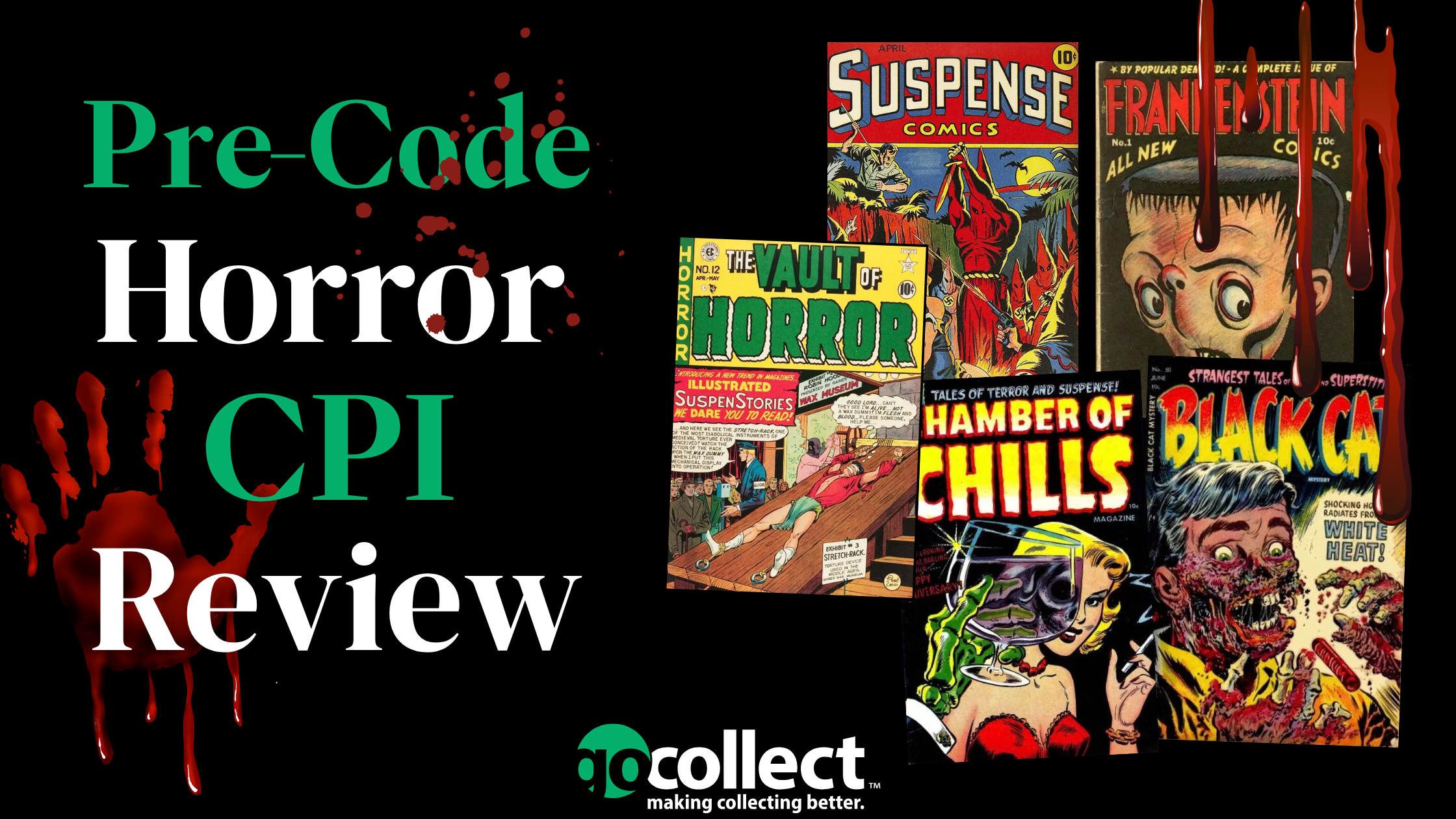
Here are twelve titles from the Pre-Code Horror basket that have shown meaningful sales activity. For each, we look at the most recent relevant sales that have surfaced in the public record and offer a brief outlook based on the pattern.
Gus Ricca's masterpiece is one of the finest skull covers ever created. A CGC 5.5 sold for $79,300 in the May 2026 Heritage event. A CGC 4.5 brought $56,120 in early October 2026. Earlier mid-grade copies had traded in the 30k–60k range depending on exact grade and page quality. Outlook: This remains a heavyweight of the basket. Fresh mid-grade material continues to find aggressive bidding. Expect continued upward pressure any time a clean 4.0–6.0+ appears.
The Schomburg bondage cover that needs no introduction. A CGC 6.5 realized $231,800 in early May 2026. Lower-grade examples have been active as well, with a CGC 2.5 at $97,600 and a CGC 2.0 at $109,800 in mid-to-late 2026 sales. Outlook: Demand at every grade level remains intense. The scarcity of higher-grade copies keeps the mid- and low-grade market extremely competitive. Any new example in 4.0 or better will test recent highs.
3. Chamber of Chills Magazine #19
The Lee Elias blonde-on-the-cover classic. Recent mid-grade activity includes a CGC 6.5 that traded in May for $19,520 and lower-grade copies (2.0–4.5 range) that have been changing hands in the 7k-17k area through 2026. A high-grade 9.0 had previously pushed toward $49,000 in a 2025 ComicLink event. Outlook: Consistent interest across the grade spectrum. The iconic cover keeps this book liquid. Mid-grade copies should keep firm. Higher grades may explode. This one is a barometer of the Pre-Code en masse.
The Johnny Craig decapitation cover that helped change the industry. A CGC 7.5 sold in the February 2026 Heritage Signature auction for $23,180. A CGC 7.0 brought $16,470 in June 2026, while a CGC 6.0 cleared $11,590 the same month. Outlook: Still one of the most recognized pre-Code covers. Mid-grade copies continue to find strong bids; entry-level at the bottom grades will only increase.
Bill Everett’s classic final-issue cover. A CGC 5.0 sold for $9,760 in September 2026. A CGC 4.5 had brought $10,500 in early 2025, while a CGC 3.0 dropped from around $6,600 to $4,907 in the same period. Outlook: Consistent mid-grade activity within this bound range. Atlas keys with strong covers like this one keep moving; clean 4.0–5.0 or higher graded copies should continue to hold or edge higher with the broader index.
Bernard Baily's classic exposed-brain cover. A CGC 3.5 sold for $7,200 in September 2025. A CGC 6.5 traded for $26,840 in the most recent September 2026 Heritage event. Outlook: Thin supply and a memorable cover keep interest high. Mid-grade examples remain the ones feeding the index and should stay liquid.
Lee Elias “White Heat” radiation cover. A CGC 4.5 sold for $15,600 in November 2025. A CGC 3.0 brought $10,370 in June of 2026, with the latest sales both showing positive values albeit signs of restoration. Outlook: One of the more actively traded Harvey horror keys. Mid-grade copies continue to clear at solid levels; expect steady demand.
L.B. Cole's terrifying living skull with spider legs cover. A CGC 2.0 sold for $3,120 in December 2025. The same grade moved lower on the next sale, while a most recent CGC 1.8 brought $3,400. A CGC 6.5 had realized $19,200 in January 2025. And a CGC 4.0 landed at $6,710 just prior to March of this year. Outlook: Logo variant distinctions matter (black vs blue), but overall demand for the issue remains firm. You will predominantly find the blue logo variant in GoCollect's sales history as this is the copy most likely to surface.
The first ever stand-alone horror comic with the Fujitani-drawn bondage cover has had a voluminous year. A CGC 8.0 traded in the February 2026 Heritage Signature for $15,860. Then a CGC 1.8 sold for $3,416 in April 2026. A CGC 7.0 broke the $10,000 mark for the 2nd time in May, and a 6.0 traded for $8,540 late last month. Outlook: Historic importance keeps this book relevant across the grade spectrum. High-mid copies stay scarce and expensive; lower grades remain approachable entry points.
A Bernard Baily skull and human-headed ant cover with Basil Wolverton interiors. A CGC 5.0 sold for $10,800 in late 2025 (November/December window). Another CGC 5.0 had brought $11,400 earlier in 2025. While the most recent CGC 5.0 sale of $8,540 occured in September of 2026. Outlook: These downward trends are offset over time. If you choose to buy, decide to hold. A very reliable mid-grade performer.
A strong, recognizable cover keeps this book stretching regularly. We've seen 10 sales in 2026, but none surpassed the height of $13,800 a CGC 8.5 did last November. A very recent CGC 8.0 finished at $8,235, while the lowest grades of 1.5-3.0 fall within several hundred dollars to a few thousand if you'd like to pick this issue up. Outlook: Seasonal spikes around Halloween will occur, but underlying demand is year-round.
Published by Prize Comics in 1944, this haunting Dick Briefer take on the classic monster consistently sells in very high grades. A CGC 9.4 sold in May for $13,420, while a 9.0 sold for just over $5,000 last November. The mid-high grades are unsure of the appropriate value as recent comps seem to be all over the place. Outlook: This book is a monster that can never die. Expect seasonal gains and meaningful dramatics as this book finds forever homes
Looking ahead, the Pre-Code Horror CPI sits in a strong position. The past year’s advance higher was not a speculative spike. It was the result of real demand meeting limited supply across dozens of titles. That foundation tends to hold. As long as mid-grade copies continue to surface and the current buyer pool remains, the index has room to keep climbing. A quiet 4–6% annual advance would not be surprising. Stronger results are very possible if a few more high-profile collections hit the block or if broader interest in Golden Age material deepens.
The books themselves still have undiscovered upside. The true icons - Punch #12, Suspense #3, Chamber #19, Crime SuspenStories #22 - remain incredibly scarce in attractive grades. Every clean copy that trades reinforces the floor. Secondary horror keys with strong covers and thin census counts can still deliver outsized moves when any example appears. And the more liquid EC and Atlas titles provide the steady turnover that keeps the entire basket healthy.
Spooky season is the perfect time to remember that these comics were never meant to be polite. They were designed to unsettle, to linger, to get under our skin. That same restless energy still drives the collectors who chase them. As long as that fascination continues, the values should keep rising. Quietly and persistently, the way good horror always does.