WHAT'S INSIDE:
-Not talking about Jordan is way harder than we expected
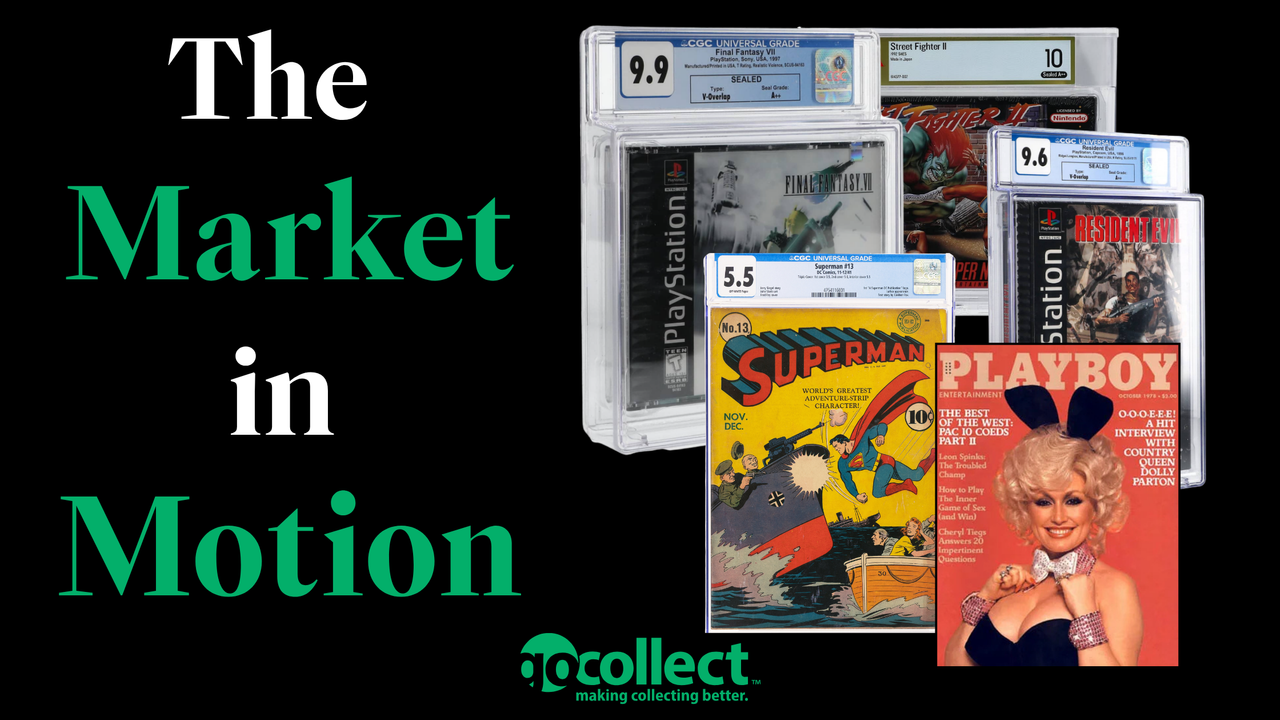
-Modern Warfare values just went full Call of Duty
-Concert posters keep printing money despite limited marketing
-Absolute Batman plans a winter vacation
I can’t help but wonder how long Michael Jordan is going to own this blog. Every time it feels like the conversation might finally move on, he jumps again… and the landing takes f-o-r-e-v-e-r.
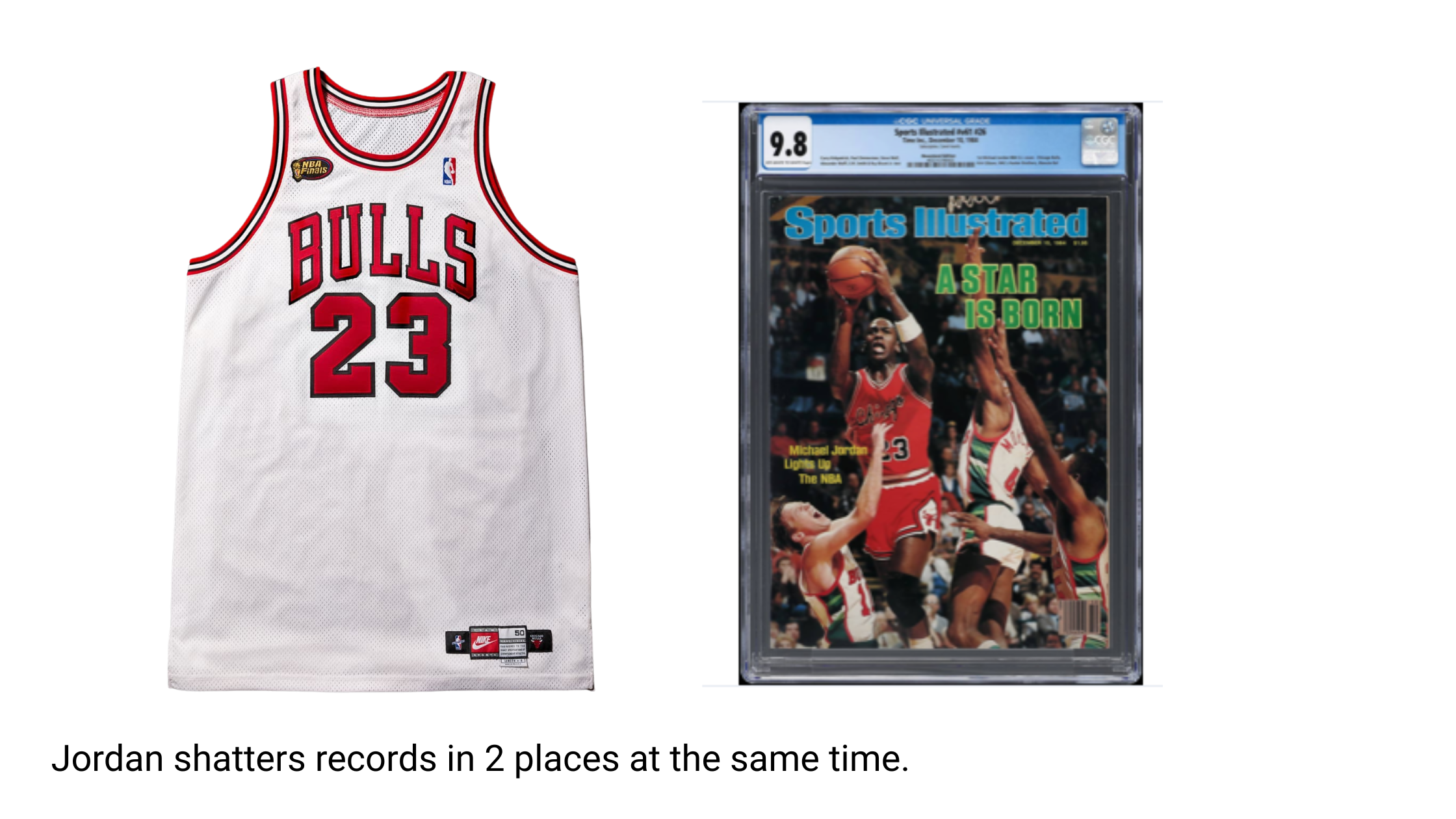
Over the last week the secondary market reminded everyone why His Airness remains the blue-chip of sports memorabilia. A white No. 23 Chicago Bulls jersey worn during Game 3 of the 1998 NBA Finals against the Utah Jazz sold for $12.26 million through Joopiter. That figure is the highest price ever paid for a piece of game-worn Jordan memorabilia at auction, eclipsing the previous mark of $10.1 million set in 2022 by a red jersey from Game 1 of the same series.
The white jersey is the only publicly known white example from a Bulls victory in that Finals run, and it carries the weight of “The Last Dance” era that still dominates cultural memory. Just one bid closed it out inside the pre-sale estimate of $10–15 million.
At the same time, graded magazines featuring Jordan continued their own climb. A CGC 9.8 copy of the December 10, 1984 Sports Illustrated “A Star Is Born,” Jordan’s first NBA cover appearance, realized $378,200 in Goldin’s Elite Summer 100 auction. That result more than tripled the prior high for the same issue and set a new all-time record for any graded magazine, surpassing the $328,180 paid earlier for a PSA 9.6 Mickey Mantle first SI cover.
Only four CGC 9.8 newsstand examples of the Jordan issue are known, so the scarcity premium is real. These two results – one at the top of the jersey market, one at the top of the magazine market – underscore a familiar pattern: when the right Jordan piece surfaces in top condition with clean provenance, buyers still treat it as a once-in-a-cycle opportunity rather than a routine transaction.
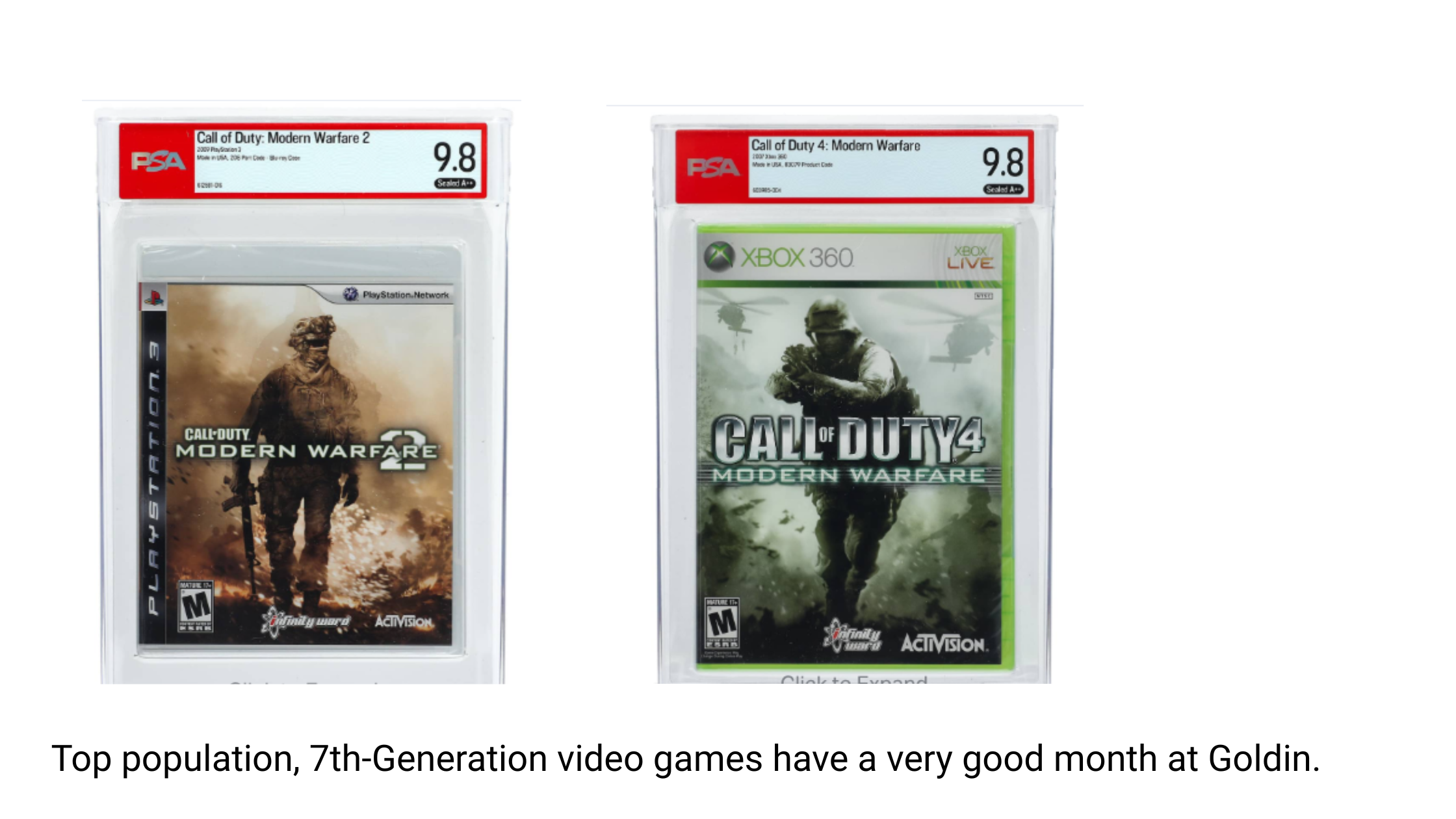
The same hunger for condition and scarcity showed up in the graded video game market. A WATA 9.8 A++ sealed copy of Call of Duty: Modern Warfare 2 for the PlayStation 3, specifically the early Blu-ray case variant, sold for $34,160. Reports circulating among high-end game collectors note that comparable copies were changing hands closer to $2,000 only three months earlier. An approximate 17x move in a very short window. The sale took place through Goldin and immediately became a talking point across the sealed-and-graded community.
That result followed an early-September Goldin offering of a sealed Xbox 360 Call of Duty 4: Modern Warfare graded PSA 9.8 A++ that finished at $43,920. Together the two sales show clear momentum for high-grade sealed Modern Warfare titles from the seventh-generation catalog. Both the original 2007 game and its 2009 sequel are benefiting from cultural weight, first-print scarcity, and top grades. Whether these are one-off spikes or the start of a broader repricing of mid-to-late 2000s sealed shooters remains to be seen, but the data points are now on the board and the current trajectory should not be ignored.
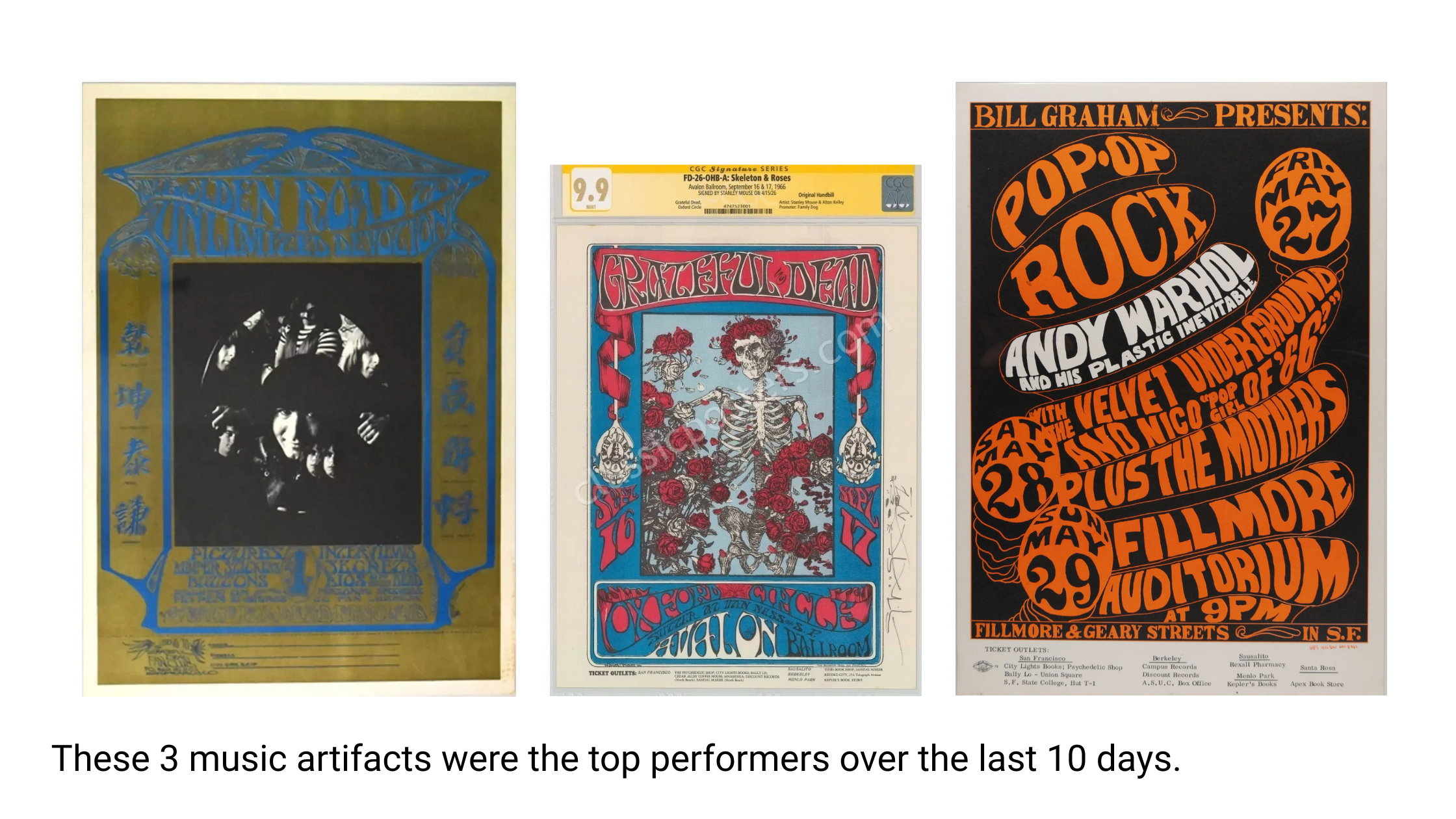
Shifting categories, ClassicPosters.com continues to prove that original rock concert posters remain one of the more quietly consistent markets in the hobby. The recent Chartbusters on GoCollect for the past 10 days were dominated by their September 27 sales.
Three standouts led the way:
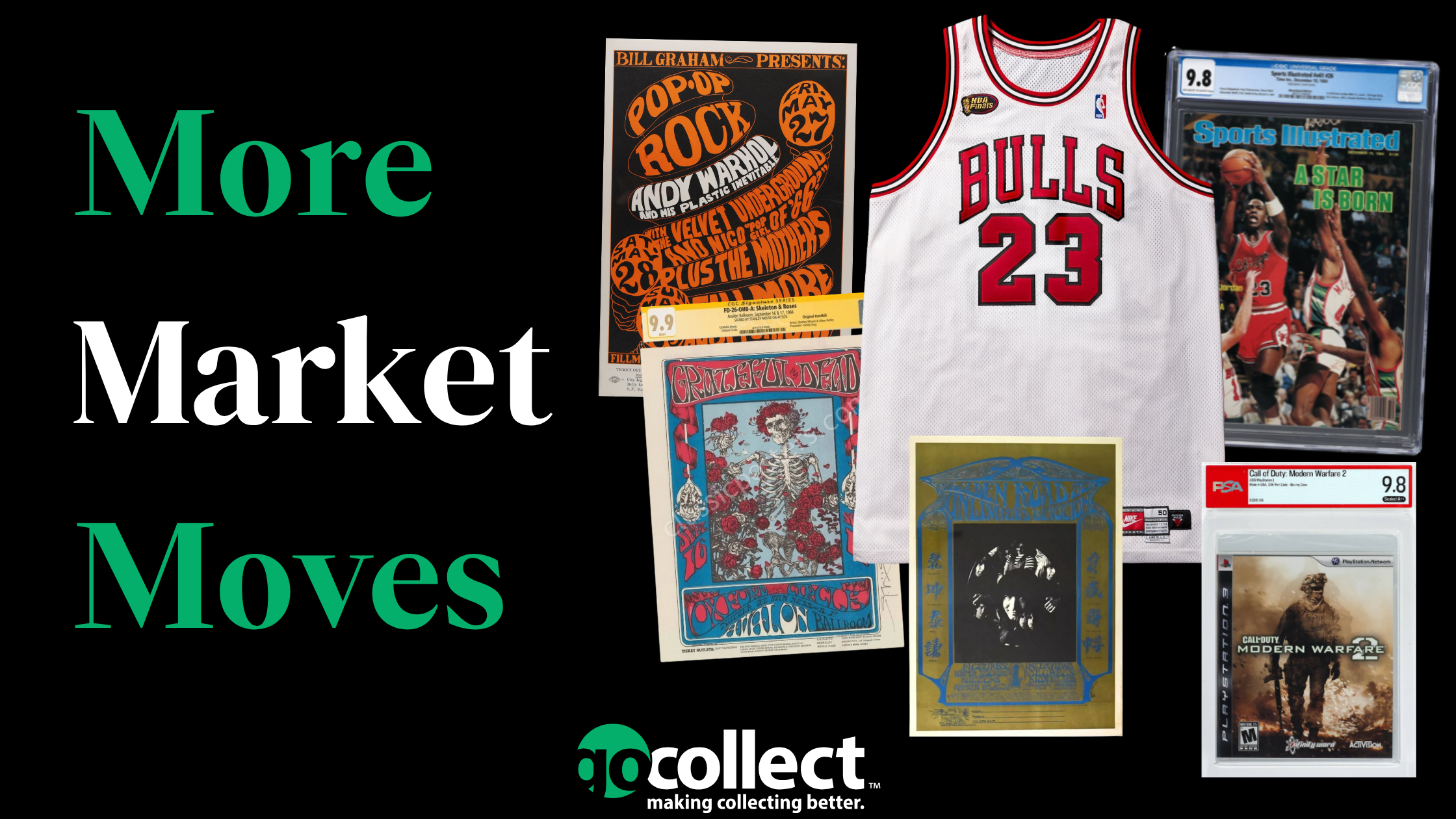
AOR-2.192-OP-1 (Golden Road Unlimited Session) brought $37,200.
FD-26-OHB-A, the iconic Grateful Dead “Skeleton & Roses” handbill in CGC 9.9, realized $27,000.
BG-8-OP-1, the early Bill Graham “Pop-Op Rock” poster featuring Andy Warhol’s Velvet Underground and The Mothers, sold for $16,800.
Close behind were the BG-105-OP-1 “Flying Eyeball” Hendrix poster at $15,600 and the AOR-2.209-OP-1 Acid Test Graduation sheet at $15,000. The specialist nature of the venue continues to matter: thin populations, condition sensitivity, and an informed buyer pool mean that when strong original 1966–70 examples surface, the market still pays up without hesitation.
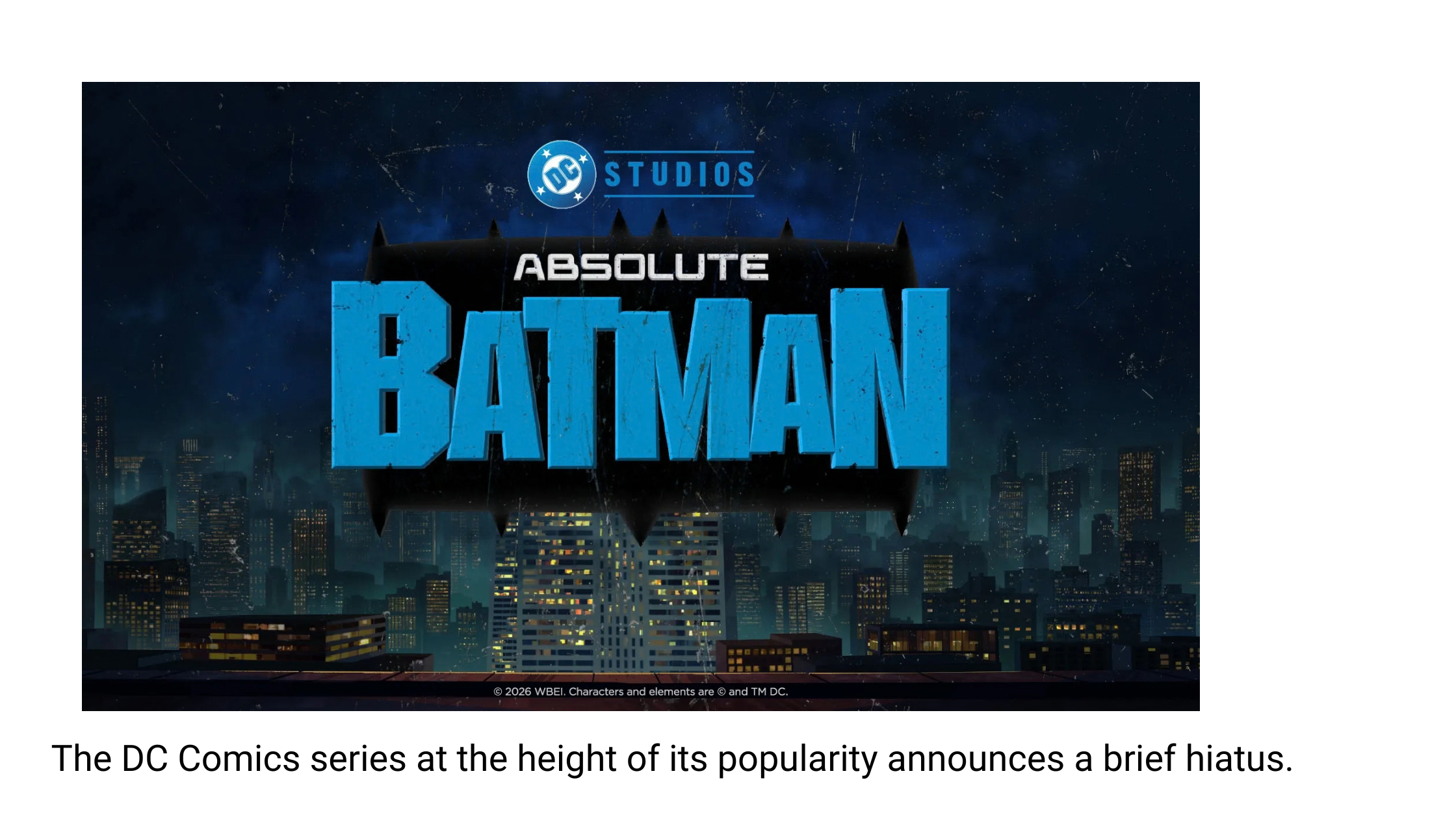
Finally, the comic side of the ledger brought news that will matter for both current readers and secondary-market participants. Absolute Batman is pausing after issue #25. DC’s December 2026 solicitations contain no mainline Absolute Batman issue for November or December. Issue #24, which introduced Barbara Gordon in a significant capacity, is already in shops. Issue #25, scheduled for late October, closes the current “Straw Man” arc as an oversized installment and is positioned as the midpoint of the roughly fifty-issue roadmap Scott Snyder has outlined. After that, the ongoing series goes quiet until 2027, with a Barbara Gordon-focused #26 planned for January and Nick Dragotta returning for #27 in February.
The creators have framed the break as intentional. December is historically soft for monthlies, and the team is protecting the quality of the larger story rather than forcing filler issues. An Absolute Batman animated series is already in development, and the creative bandwidth required for that adaptation appears to be part of the calculus.
What does the hiatus mean for the secondary market on the earlier issues? History offers a reasonably clear guide. When a hot ongoing title takes a planned break after a major arc close, the short-term effect is usually increased demand for the early numbers, especially #1 and the first handful of key story issues. Speculators who missed the initial print runs or who have been waiting for a dip often step in during the quiet period.
Graded copies of Absolute Batman #1 have already shown resilience; a multi-month gap with the knowledge that the creative team is returning and that a television adaptation is in the works tends to tighten supply further. Later issues from the current arc may see some modest movement, but the first appearances and the early “Absolute” branding pieces are the ones most likely to firm up. The flip side could see the oversupply of mid-run copies fall into short-term softness until the book returns and new readers cycle back in. Overall, the market has treated Absolute Batman as a modern key series rather than a pure flip vehicle, so the more probable outcome is steady-to-stronger secondary prices on the earliest material rather than a collapse.
Across every category the same pressure is at work. When a single item surfaces in the condition the market actually wants, capital still moves rapidly. Concert posters somehow continue to deliver these high-figure results for the right pieces without needing any mainstream media attention whatsoever. And the Absolute Batman pause only sharpens the point: even a deliberate gap in a current series tightens the early numbers because collectors already understand that in-demand finite supply does not stay soft for long.
Scarcity only becomes valuable when the buyers recognize it. That recognition is what the market is rewarding right now, and it shows no sign of slowing down.