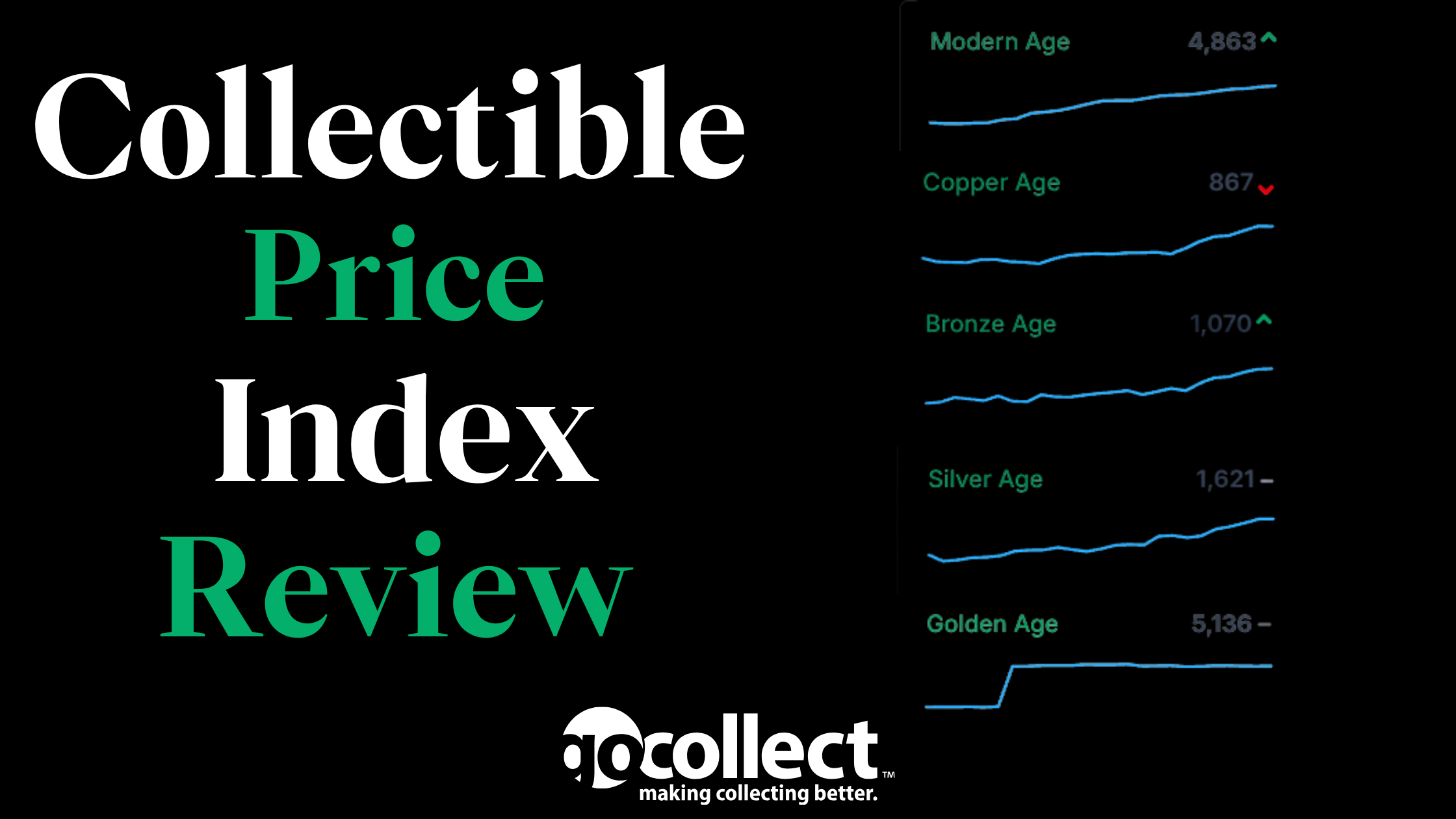
The GoCollect Collectible Price Index (CPI) is a market benchmark designed to track the overall health of the comic book collecting market, much like the Dow Jones Industrial Average tracks blue-chip stocks. Built from carefully selected baskets of key issues and calculated from recent CGC Universal sales data, the CPI provides a clear, data-driven view of price trends across five distinct eras: the Golden Age (1938–1956), Silver Age (1956–1970), Bronze Age (1970–1984), Copper Age (1984–1993), and Modern Age (1994–present). In this series we examine the recent trajectory of each index, highlighting how different segments of the market have performed and what the numbers reveal about collector demand
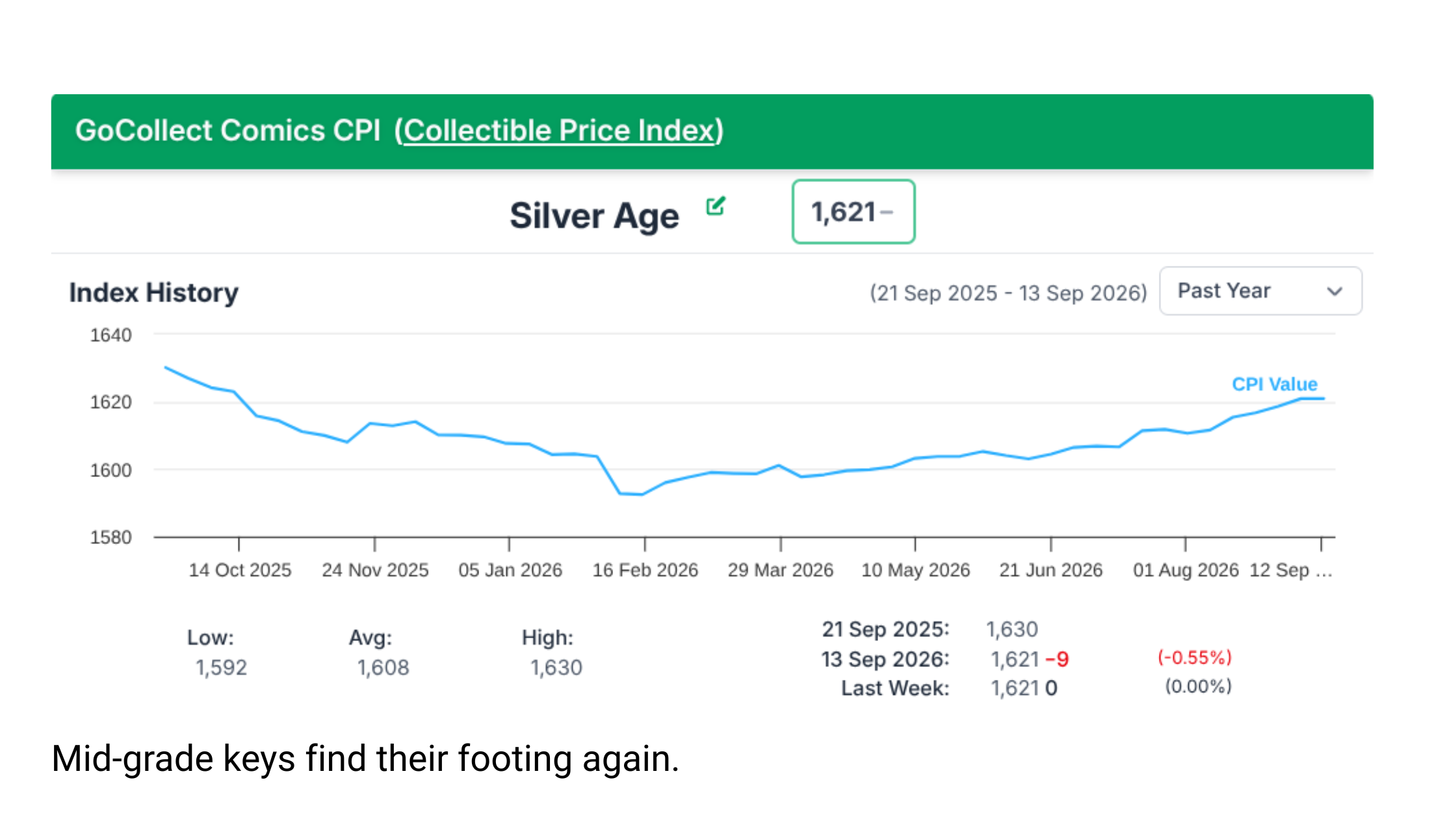
Silver Age CPI Trajectory: Measured Recovery After Early Softness
The Silver Age Collectible Price Index currently stands at 1,621.
Over the past twelve months the index opened near 1,630, drifted lower through the winter into a trough around 1,592, and has since posted a series of small weekly advances to reclaim most of the lost ground. The recovery has been orderly rather than sharp - typical of a market built on mature, widely distributed keys that trade with reasonable frequency.
Looking at individual contributors helps illustrate the pattern. Fantastic Four #5, the top weight in the basket, has shown stability in the mid-grades that dominate the calculation. Showcase #22 (first Green Lantern) and Action Comics #242 have followed a similar path: modest weakness late in 2025 followed by gradual firming. Early Amazing Spider-Man issues (#2, #3, #4, #14) and Journey into Mystery #85 have mirrored the broader index, with mid-grade averages (the grades that matter most for this CPI) finding buyers at levels that support the recent uptrend. Books such as The Flash #123 and Fantastic Four #48/#49 have been less decisive, contributing to the measured rather than explosive nature of the rebound.
Technically, the Silver Age index draws from the three most recent CGC Universal sales in grades 2.5–8.5 across its fifty titles. The result is a relatively smooth indicator that filters out the extreme high-grade volatility common in this era while still capturing real shifts in collector demand. The past year’s path suggests the Silver Age market absorbed earlier pressure and is now grinding higher on the strength of consistent mid-grade activity rather than isolated trophy sales.
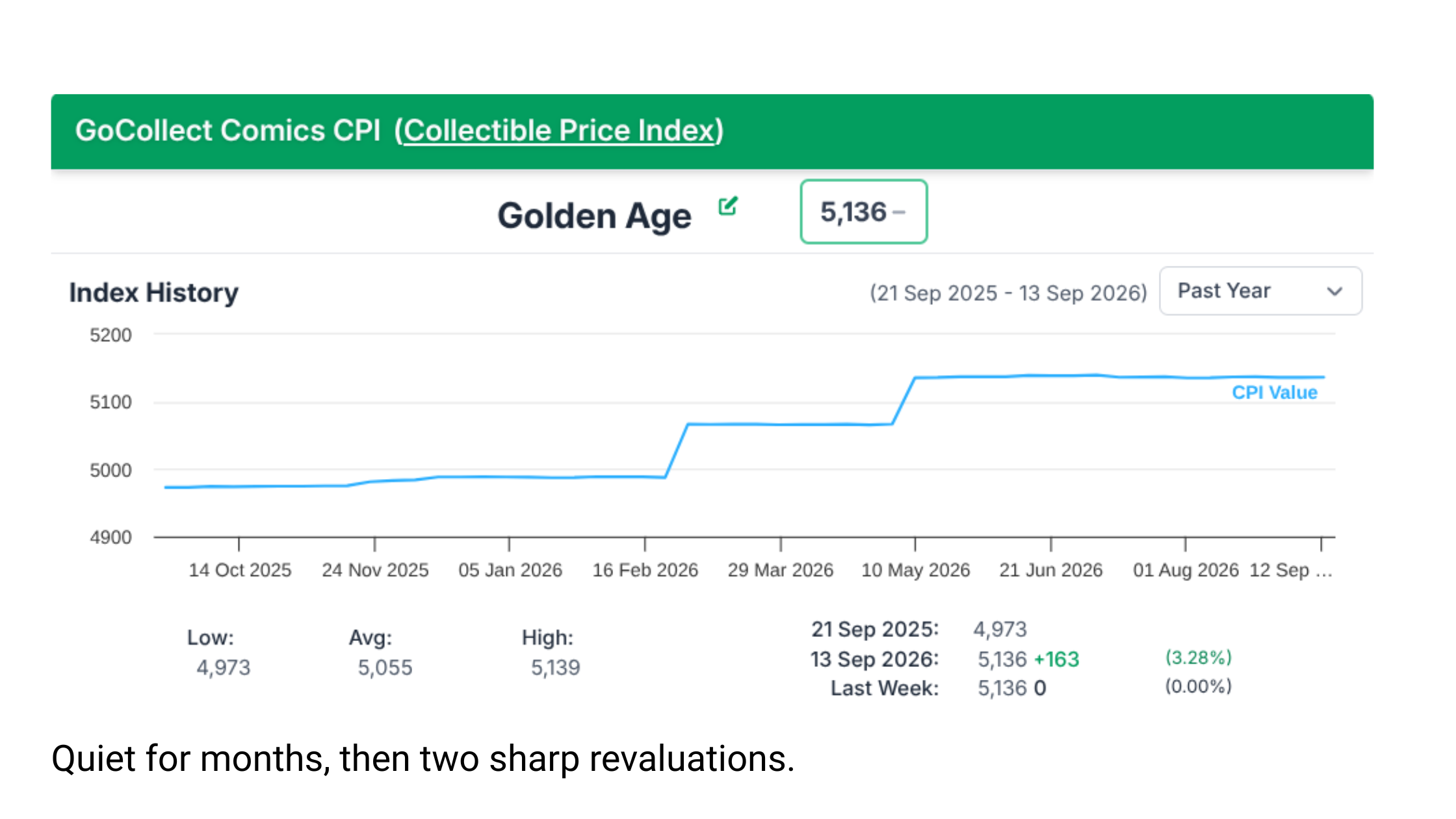
Golden Age CPI Trajectory: Discrete Advances to New Territory
The Golden Age Collectible Price Index currently stands at 5,136.
The past year tells a different story from the other eras. The index spent the first half of the period locked in a narrow range near 4,980, then delivered two clear step-ups—one in the March–April window and a second in May–June—before consolidating just below its current level. These were not gradual climbs but discrete jumps, the hallmark of a market where liquidity is thin and individual high-profile sales can move the needle.
Specific titles reinforce the picture. More Fun Comics #73 and All-American Comics #16 (first Green Lantern) appear to have been among the catalysts for the spring advances. Detective Comics #38 and Wonder Woman #1 have shown the same pattern of long flat periods interrupted by sudden strength when a fresh group of mid-to-high grade copies changed hands. Books such as Punch Comics #12, Crime SuspenStories #22, and Detective Comics #225 have contributed less frequently but with outsized impact when they do trade, consistent with the overall stepwise trajectory. Lower-population titles in the basket tend to remain quiet for months and then reprice higher once a sale occurs, which is exactly the behavior visible in the index chart.
The Golden Age CPI uses the three most recent CGC Universal sales in grades 0.5–8.0. That wider grade band captures the reality of Golden Age survival rates while still excluding the most extreme high-grade outliers. The resulting index is less about continuous price discovery and more about periodic revaluations. The 2026 advances indicate that when material does appear, buyers are willing to pay up, pushing the broader basket into new territory.
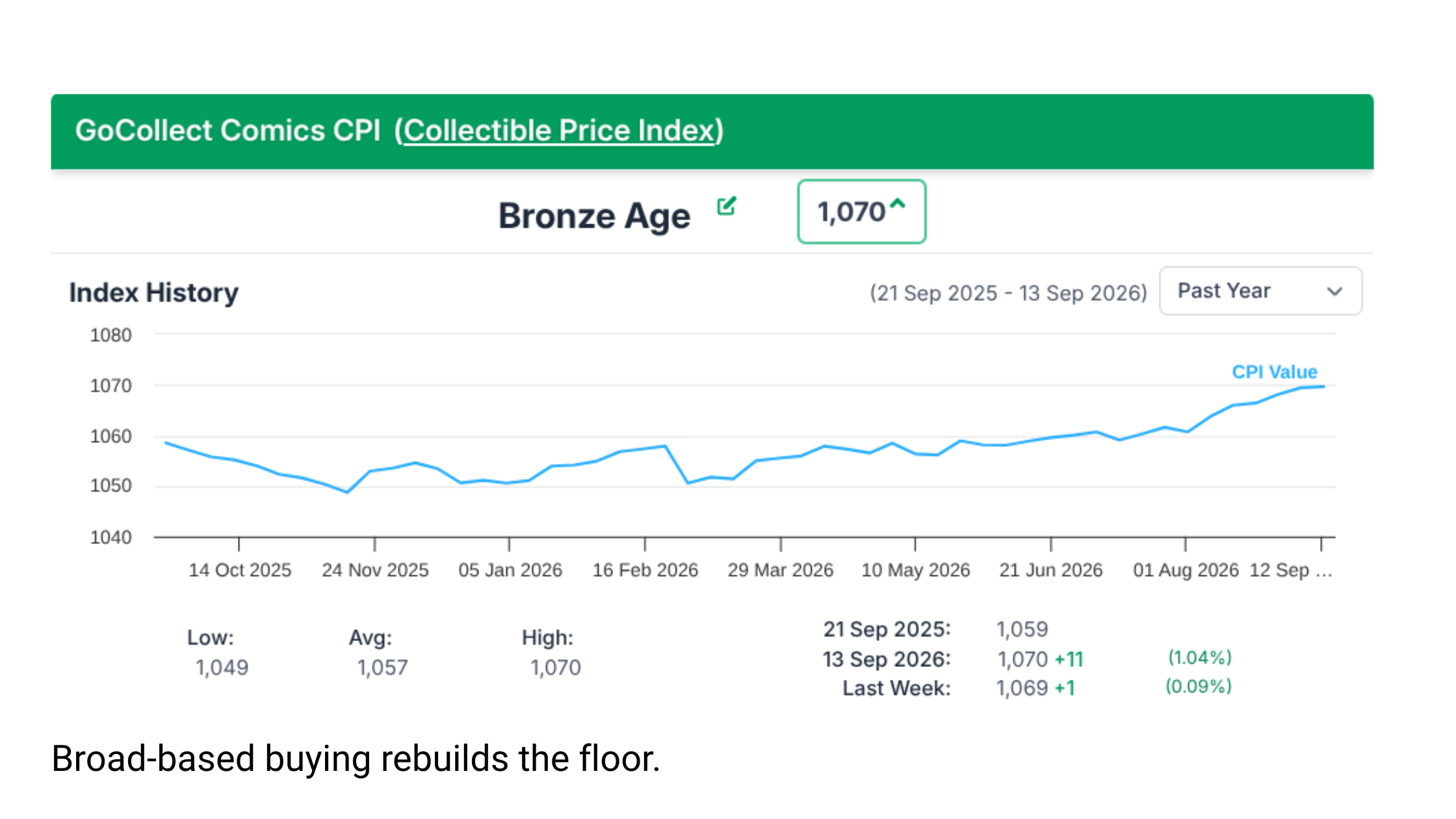
Bronze Age CPI Trajectory: Steady Grind Above 1,070
The Bronze Age Collectible Price Index currently stands at 1,070.
Over the past year the index opened near 1,060, touched a low around 1,048 in late 2025, and has since climbed in a series of modest, consistent weekly gains. The recovery lacks the drama of the Modern Age or the sudden jumps of the Golden Age; it is a slow, broad-based improvement typical of a market with deep liquidity across many grades.
House of Secrets #92 (first Swamp Thing) and Incredible Hulk #181 (first full Wolverine) have been reliable anchors, with their mid-to-high grade averages supporting the upward drift. Giant-Size X-Men #1 and Amazing Spider-Man #129 (first Punisher) have followed a similar path - softness in the fourth quarter of 2025 followed by gradual firming through 2026. Other regular contributors such as Green Lantern #76, Batman #232, Tomb of Dracula #10, and Star Wars #1 have shown comparable resilience, with enough sales volume to keep the index moving higher without large single-sale distortions. Even secondary keys like Werewolf by Night #32 and Iron Man #55 have participated in the recovery, underscoring the breadth of the move.
The Bronze Age index calculation averages the four most recent CGC Universal sales in grades 4.5–9.8. The higher grade ceiling and slightly longer lookback produce a smoother series than the Golden or Silver Age indexes, which is visible in the chart’s steady rather than jagged recovery. The technical picture is one of a market that found a floor and has been accumulating strength across a wide set of keys.
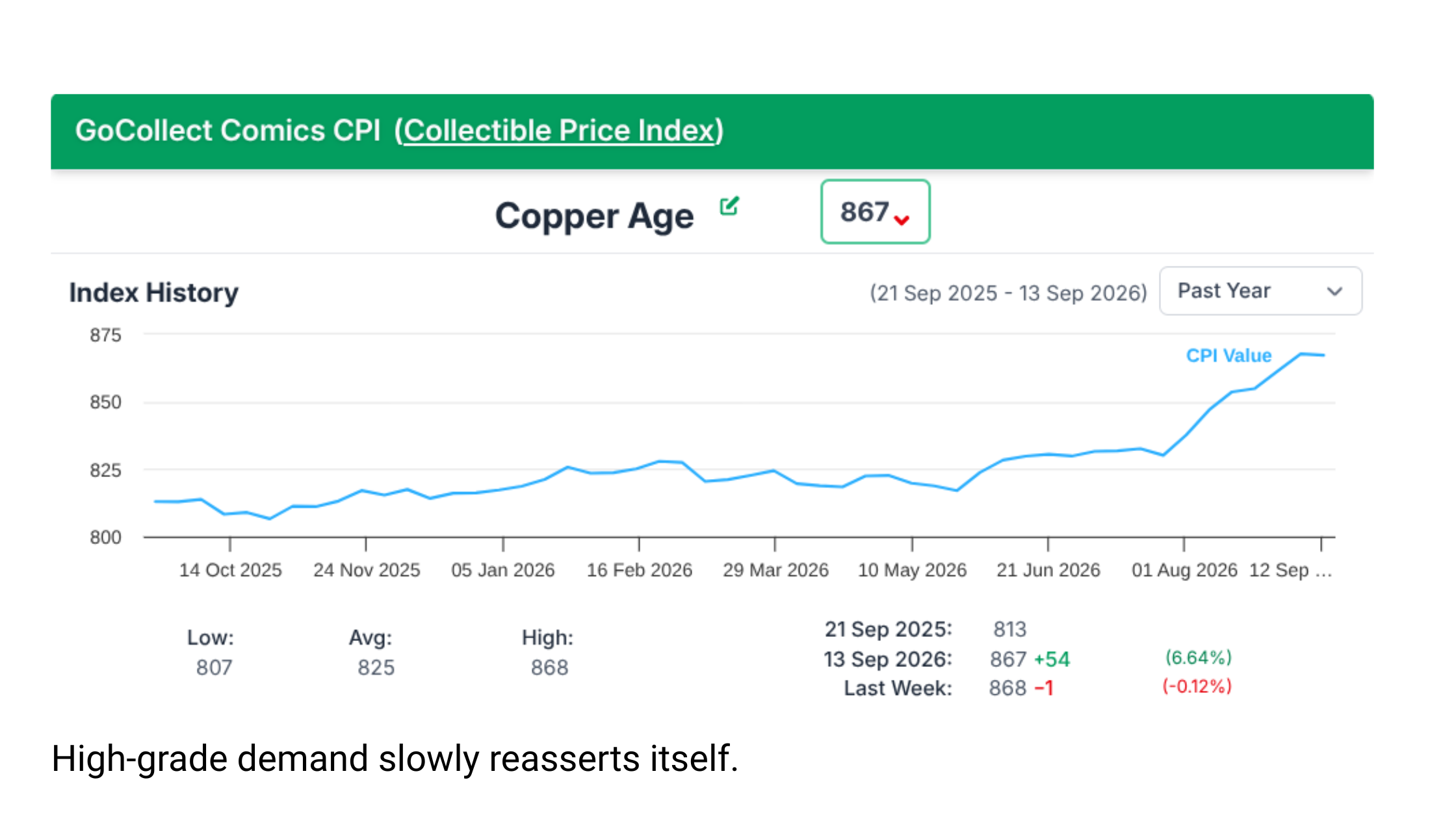
Copper Age CPI Trajectory: Gradual climbing period will continue
The Copper Age Collectible Price Index currently stands at 867.
Over the past twelve months the index opened near 815, moved sideways-to-higher through the first half of the period with several small pullbacks, and then accelerated from roughly mid-2026 onward to reach its present level. The overall gain is solid—roughly 6–7% from the early trough—but the path has been less linear than the Modern Age and more persistent than the stepwise Golden Age moves.
Specific titles help explain the shape of the advance. Amazing Spider-Man #300 (first full Venom) and Amazing Spider-Man #252 (first black costume) have been steady contributors, with their high-grade averages supporting the gradual lift. New Mutants #98 (first Deadpool) and Uncanny X-Men #266 (first Gambit cover) have shown similar resilience, reflecting continued collector interest in late-’80s/early-’90s first appearances. The Crow #1 and Evil Ernie #1 have added volatility on the upside when fresh high-grade copies surface, while Teenage Mutant Ninja Turtles-related keys (TMNT #2, Raphael #1) and The Batman Adventures #12 (first Harley Quinn in standard comic format) have participated in the later-stage strength. Other regulars such as Incredible Hulk #340, G.I. Joe #21, Watchmen #1, Sandman #1, Spawn #1, and Batman: The Dark Knight Returns #1 have rounded out the move, producing the broader, less dramatic climb visible on the chart.
Technically, the Copper Age CPI averages the four most recent CGC Universal sales in grades 8.0–9.8 across its fifty titles. The elevated grade band matches the reality of a market where high-grade copies of these relatively modern keys still drive most of the value, while the four-sale lookback smooths out single-auction spikes. The resulting series shows a market that spent much of the past year consolidating before finding more decisive buying interest in the second half of the period.
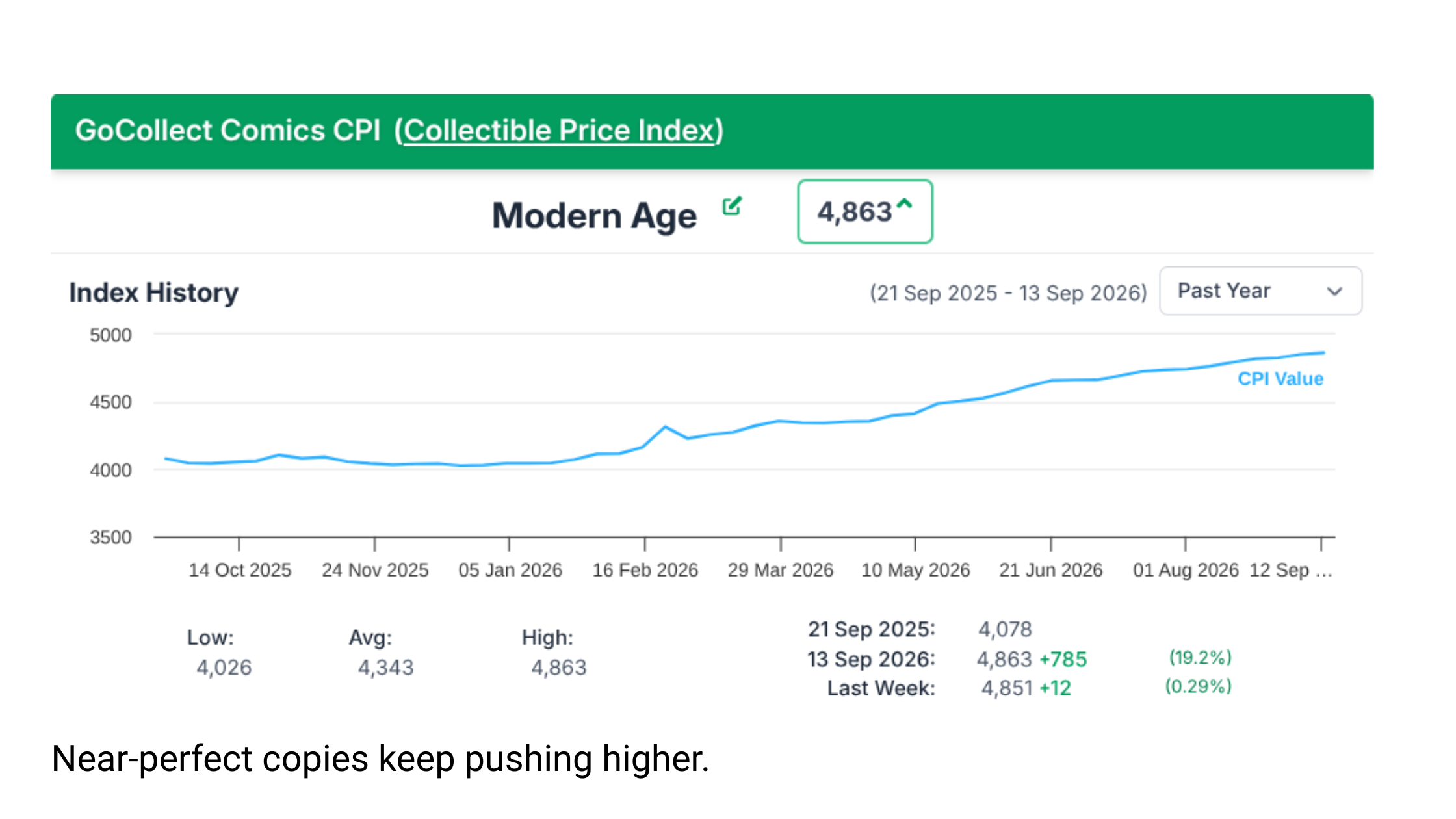
Modern Age CPI Trajectory: Persistent Climb to 5,000
The Modern Age Collectible Price Index currently stands at 4,863.
This has been the strongest trajectory of the 5 eras. The index began the past year near 4,100 and has risen almost without interruption, accelerating through the middle of 2026 to reach its present level. The advance is broad and sustained, reflecting robust demand for high-grade copies of relatively recent keys.
Invincible #1 remains the clearest leader, with its limited set of high-grade sales continuing to push the index higher. The Walking Dead #1 and Ultimate Fallout #4 (first Miles Morales) have followed closely, delivering consistent gains in the 9.0–9.8 range that defines this CPI. NYX #3 (first X-23), Something is Killing the Children #1, and Star Wars: The Clone Wars #1 have also contributed meaningfully, while books such as Edge of Spider-Verse #2, Saga #1, and TMNT: The Last Ronin #1 have added further breadth. Even mid-tier modern keys in the basket have participated, producing the smooth, upward-sloping chart that stands in contrast to the other eras.
The Modern Age CPI averages the five most recent CGC Universal sales in grades 9.0–9.8. The narrow high-grade focus and longer lookback capture the reality of a market where near-perfect copies drive value. The result is a clean, continuous uptrend that shows little of the hesitation seen elsewhere.
Cross-Market Breakdown
Placed side by side, the five indexes reveal distinct market personalities rather than a single narrative.
Modern Age is the clear leader in momentum. Nearly uninterrupted gains of roughly 18–20% over the past year, driven by high-grade demand for a relatively young set of keys.
Golden Age has delivered the largest absolute gains in 2026, but through discrete steps rather than continuous appreciation, reflecting thin liquidity and the outsized impact of individual sales.
Copper Age sits between the strong, continuous Modern Age rally and the more measured recoveries in Silver and Bronze. It lacks the scarcity-driven jumps of Golden Age, but it has delivered a clearer upward trajectory than either Silver or Bronze over the same window
Silver Age and Bronze Age occupy the middle ground. Both found floors in late 2025/early 2026 and have recovered in measured fashion. Silver Age remains the more restrained of the two; Bronze Age has edged higher with greater consistency across a wider grade band.
The technical contrast is instructive. Taken together, the data points to a bifurcated market: strong, high-grade-driven demand at the modern end; selective, scarcity-driven strength at the Golden Age end; and steady but unspectacular recovery in the classic Silver, Copper, and Bronze middle. The next several months will show whether the Modern and Golden Age strength broadens or remains concentrated in their respective high-value segments.